Showing posts with label seafood. Show all posts

Thursday, June 12, 2014

Dashing into Dahican Strip (Part 2)


Facing Mayo Bay, Dahican, which is being groomed as the “Skimboarding Capital of Southern Philippines”, is a sought-after sanctuary of beach enthusiasts who love to swim, surf, snorkel and skimboard in the blue waters coming from the Pacific. 

Dahican Strip
Having been to Dahican several times in the past, I told my compansions that we should try to get ourselves billeted at the resorts in Dahican so that we can easily go swimming and stroll along the beach anytime we want.

Dahican Beach


Beach-hungry feet

Days before the sojourn, Maliz tried to book the team at Botona Dahican Resort (where I had stayed before). To her chagrin, it was fully booked! Tropical Kanakbai, on the other hand, had available rooms but the rates were quite steep for us. 

Left with no other choice, she tried to make reservations with other nearby beach resorts—Blue Bless, Gregorio, Jambay and Cinco Masao, which are the four popular establishments sharing space along the inviting shores of Pujada Bay.


pic name pic name pic name

 
I haven’t stayed in any of those resorts before but I’ve heard from friends who’ve been there that they offer nice accommodations ranging from Php500 to Php4,000 a night. Depending on the rate, the rooms can accommodate as many as six people.

Day tourists can chill out at their open cottages by the bay. Those staying overnight may billet themselves at any of the resorts’ guestrooms. Those wanting to go island hopping to the nearby islands of Waniban, Pujada and Oak may make arrangements with these resorts. 

To our delight, one room was vacant at Jambay Resort that could accommodate all six of us! Jambay was almost filled to capacity as many budget travellers who couldn’t billet themselves at the other resorts flocked there. Whew, we’re so lucky! 

It took us roughly 15 minutes shuttling to and fro Jambay and Dahican but we didn't mind the small inconvenience. Staying at Jambay was the most practical thing to do given the circumstances that time.


After securing our stuff at Jambay, we headed towards Dahican. On our way there, we saw this new treasure-trove of heritage that true blue culture vultures have been raving about. I’ve been raring to explore it myself since it was opened to the public early this year—the state-of-the-art Subangan Museum!

At Subangan, the heart and soul of Davao Oriental is up on display for visitors to admire. Those wanting to know what makes the province tick will find the answer in the said repository whose name was derived from the word subang meaning “east” or “sunrise”. Subangan, thus, means “where the sun rises” in the vernacular. 

The remains of DavOr, the gentle giant, inside the Subangan Museum
Inside the museum, you’d be dumbfounded by the wide array of interesting artifacts on display—relics, objets d'art, photos, videos, interactive visuals, documents, fabrics, and other products—all tangible evidences of the province’s rich history and culture.  

Subangan’s pièce de résistance, however, are the preserved remains of the 53-foot sperm whale prominently displayed at the lobby. Weighing about 20 tons, the gentle giant is said to be the largest in the Philippines and the seventh largest in the world.

 
pic name pic name pic name

Named Davor (a portmanteau for Davao Oriental), the mammal was initially found dead along the shores of Governor Generoso and San Isidro, two of Davao Oriental’s ten towns. Huge waves, however, washed it ashore in Talikud Island in Davao del Norte. 

One of Governor Corazon Malanyaon’s pet projects, Subangan was bolstered by the recovery of Davor’s remains whose preservation was made possible through the combined efforts of several national agencies and the provincial government which had to go to great lengths to retrieve the whale’s bones.

The governor once said that Subangan represents “eternal hope, endless as the rising of the sun as it welcomes each new day” and “symbolizes the resiliency of the people of Davao Oriental” which the world saw during the onslaught of Super Typhoon Pablo.


Aside from Davor, another interesting hallmark of the museum’s Natural Heritage Section which caught my attention was the exhibit on Mt. Hamiguitan Wildlife Sanctuary. This particular exhibit’s prominent rarity is the amazing "pygmy forest" of century old trees. Seeing the said unique forest one of these days is part of my bucket list.
 
Davao Oriental’s other tourist destinations like pristine Dahican Beach in Mati, amazing Aliwagwag Falls in Cateel (which I’ve visited before Super Typhoon Pablo damaged it), and the centuries-old Caraga Church are also highlighted in the section.

Culture vultures shouldn’t dare miss the museum’s Cultural Heritage Section, which highlights the rich culture and history of the province’s indigenous communities, particularly the Mandayas and the Kalagans. The exhibit features woven fabrics, baskets, weapons and tools used by the tribes.

Meanwhile, history buffs dropping by the Historical Heritage Section will be intrigued to discover that the province was once a part of Caraga Province, which originally included the two Agusans, the two Surigaos, the eastern portion of Misamis Oriental and the northern part of Davao Oriental!   

Too bad, we failed to explore the section on Typhoon Pablo (Bopha) Memorial, which commemorates the catas-trophic storm that hit Mindanao about two years ago. That for me is one good reason to return to Subangan one of these days.

While in Subangan, we also spent some time exploring the well-kept gardens, nibbling the empanadas we bought from Seaside at the museum's cafe, and taking a peek at the mementos sold at the souvenir shop.

From the museum, we went to the public market where we bought the freshest bounties from the sea. That night, we had another sumptuous seafood meal—kinilaw na malasugue (blue marlin ceviche), sinabawang malasugue (blue marlin soup), adobong pusit (squid) and grilled tuna tail, cooked to perfection by the staff of Jambay Resort. 

Later, we spent a few hours in humorous banter while sipping our after-dinner drinks. Tired from the day’s meanderings and weakened by past sleepless nights, I excused myself early from the drinking spree so I can doze off, leaving to the other guys the delightful task of finishing the last few bottles of beer we bought. 

The road to Dahican
I also wanted to wake up at 5 o’clock in the morning so I can capture the sunrise at nearby Dahican. While I already have a fair share of sunrise shots from my previous sorties to the beach, I still couldn’t get enough of the awe-inspiring phenomenon!  

To my dismay, the sun went up rather reluctantly over Mati the next day. Early in the morning, the sky turned into a whitish haze; there was no glowing sunrise at that hour. Ah, the vagaries of weather—or should I say, climate change.

Summer’s folding up and the rains are coming—I hope not in torrents. Even so, Team Dahican didn’t allow the whimsical weather to ruin our day. So, right after a hearty breakfast at Jambay Beach Resort, we trooped back to the famous beach.

To our delight, the sky suddenly lit up as we reached Botona Resort where we frolicked for a few hours before returning to Davao. At Botona, anything is possible under the sun—swimming, surfing, skimboarding, sailing, snorkeling, scuba diving, etc.

If you intend to stay in one of the picnic huts there, you can bring along your own food and drinks. If you wish, you can stay overnight, that is, if the rooms aren’t fully booked! In that case, you’ll have to wait for the off-peak season.

We rented one of the picnic tables along the beach at Botona. From where we sat, the turquoise waters of Mayo Bay seemed to beckon us to take a dip. And we heeded the call but not after enjoying another round of selfies with the skimboards used by the famous Amihan Boys. LOL!

Dahican’s surreal seascape has always appealed to those who’ve seen it. Caressed by wild waters coming from the Pacific, the waves there, however, suddenly rush at you and seem to pull you further into the deep. Unless you’re really a good swimmer or diver, you’re better off in the shallow waters.

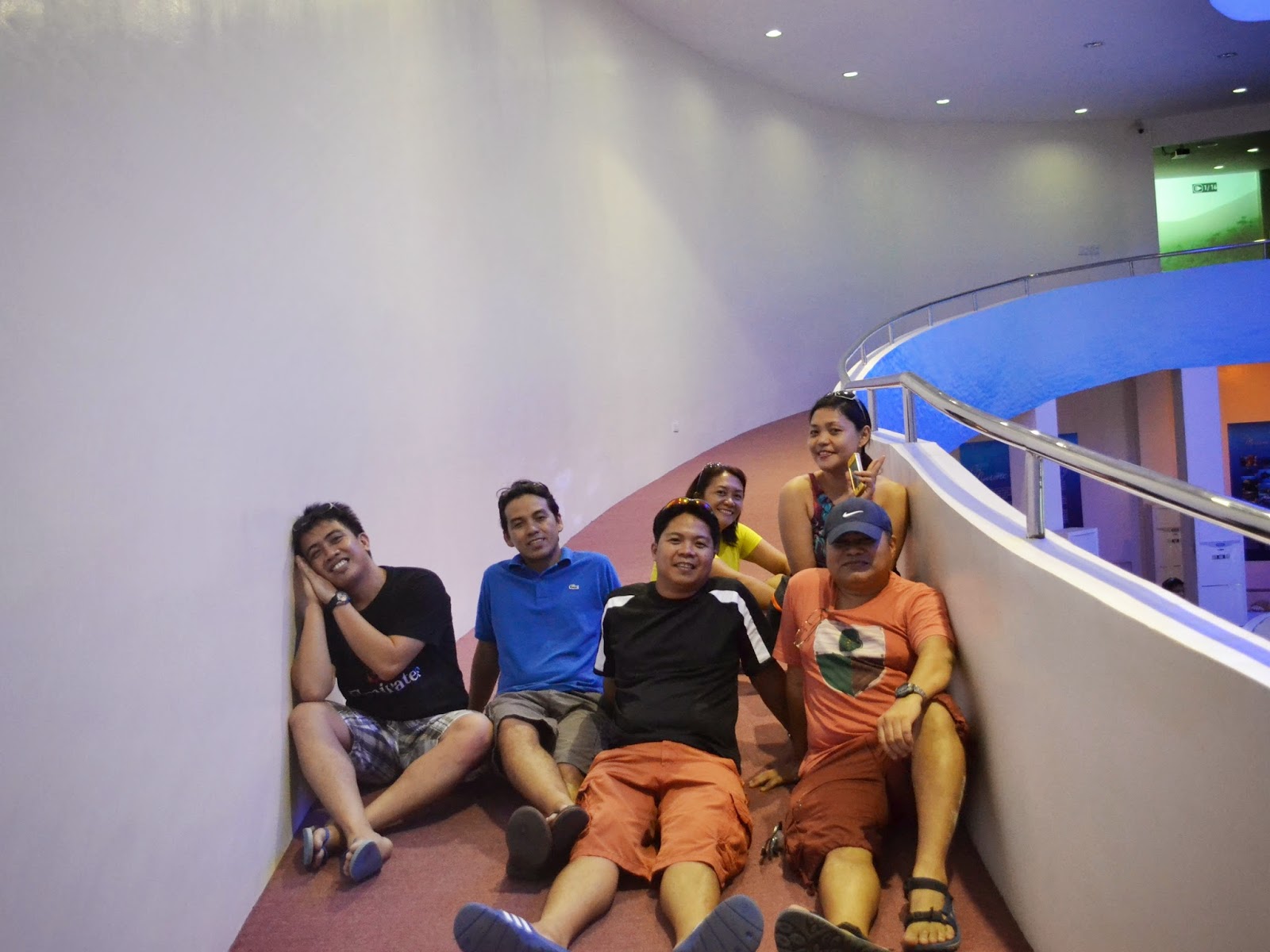
All told, I enjoyed to the hilt the company of my happy-go-lucky companions during this recent invasion of Mati. Geez, I couldn’t recall a single dull moment with Team Dahican! Together with the boisterous bunch, the escapade was six times more fun! 

If there’s one thing about this sojourn I’m quite certain of, it would be this: Mati’s tourist come-ons, especially Dahican, have definitely magnetized my co-workers! So, cheers to the city for making our last summer hurrah truly an unforgettable adventure!
 
Finally, I say: Thank you, Dahican, for the wonderful images we world-weary souls took back home during that all-too quick visit there. For sure, I’m—I mean we’re—coming back for you—and most likely, with the travel bugs who missed this recent sojourn. :-D

Monday, November 18, 2013

Surprised by Surigao City (Part 2)


Seen for the first time, Surigao surprised me with the rarity and richness of its picture-perfect seascapes. Here’s a city of over a dozen islands and islets where beaches count among the most stunning in this country. But there’s more to the city than just palm-fringed white-sand beaches, emerald waters and stress-free island life.

Cottages in Mabua-Ipil Pebble Beach
Having seen too many beaches in the places I’ve
been to, I wasn’t too keen on exploring Surigao’s immaculate shores which are scattered all over the place. However, upon hearing about a bizarre, one-of-a-kind beach found in the fringes of the city, I became curious and wanted to see it up close and personal.

Glimpse of Mabua-Ipil Pebble Beach and Surigao Strait


Tourists who’ve had enough of black, white or pink-sand beaches should head for one of the city’s must-see destinations: Mabua-Ipil Pebble Beach. What makes the one kilometer stretch a sight to behold are the thousands of smooth stones dotting the rugged shores and overlooking the deep blue waters of Surigao Strait.

Located some thirty minutes away from the downtown area, the off-the-beaten-path attraction is often ignored by visitors who usually opt for the spectacular swells of Siargao and the lovely lagoons of Bucas Grande, two of the most frequented islands in Surigao del Norte. Well, I must say that they’ve missed a lot by skipping the beach.
 
Luckily, we found time to pay the beach a short but sweet visit. Travelling to that part of Surigao was a joyride itself as we passed along a well-paved highway that treated us to an awesome vista of seascapes. It was, however, briefly interrupted as we entered a narrow dirt road leading to our destination, Mt. Bagarabon Beach Resort.

Peebles galore at Mabua-Ipil Beach


Glimpse of Southern Leyte
Passing along the coastal communities on the way to the resort, a twinge of envy welled up inside me as I gazed at the look of contentment etched on the faces of the fisher folks we saw. Despite the plainness and privation of their lives, they seemed to have found bliss. How I wish my life were less complicated like those people.

At the end of the stretch, we pulled over at the resort and headed for the bizarre beach. The whole stretch of Mabua-Ipil Pebble Beach is best viewed atop a hill which could be reached by scaling a 300-step stairway. Too bad, we didn’t have time to climb it and watch the unfolding of sunset there. Even so, the unique beach is simply marvelous!

Sea-faring Badjaos in Surigao Strait
Strolling along its stony shores, I had a glimpse of the lofty mountains of the island of Leyte. From what I’ve gathered, a three-hour ride aboard a ferry boat from Surigao will take you to the port of Liloan in Southern Leyte. You can cut that time to a little over an hour if you’re taking a ferry that’s bound for the port of San Ricardo.

Lipata Port Building
Liloan, however, is only four to five hours away via land trip from Tacloban City while San Ricardo is about five to seven hours by bus or van to the capital of Leyte Province. If only I have time and extra resources, I would have wanted to see for myself the extent of the havoc that Yolanda had wrought in that part of the country.

Basul Island
Lipata Port and Ferry Terminal
From the pebble beach, we dropped by Lipata Port and Ferry Terminal, which has earned for Surigao the title, “Gateway to Mindanao”. The port serves as the entry  point to the country’s second largest island, forming part of the so-called Pan-Philippine Highway which stretches from Laoag City all the way to Zamboanga City.

Lipata has roll-on-roll-off facilities providing services to the ports of Southern Leyte. While inside the complex, I managed to sneak into the docks, which is off-limits to outsiders, and took some snaps of captivating Surigao Strait. From where I stood, the tiny island of Basul, one of Surigao’s seventeen islands and islets, was visible. 

Not to be missed when you’re in Surigao are the historical and cultural sites scattered all over the city. Foremost among them is the City Hall. Built in the 1950s, the building stands right on the very spot where the Philippine flag was first unfurled in Mindanao in 1898 by triumphant Filipino revolutionaries, marking the end of Spanish rule. 
 
Rizal's monument at Luneta Park

Adjacent to the City Hall is a tree-lined promenade which is Surigao’s version of Luneta. It features Dr. Jose Rizal’s monument, food stalls, souvenir shops, a gazebo and a playground. On sweltering days, many locals while away time there, seeking solace under the cool shades of those huge acacia trees surrounding the park.

St. Nicholas of Tolentine Cathedral
From Luneta, I proceeded to the nearby Cathedral of St. Nicholas of Tolentine (San Nicholas de Tolentino). Of the four cathedrals in the Philippines (the other three are in Mati in Davao Oriental; Tandag in Surigao del Sur; and Cabanatuan in Nueva Ecija) which are dedicated to the saint, the one in Surigao is said to be the oldest. 
Inside the Surigao Cathedral

The existing structure must have been done in the late 1930s but the parish had long been in existence, dating back to the 1750s when the Augustinian Recollects came to the then undivided Surigao. Named in honor of the city’s patron saint, the church stands beside St. Paul University, a private school run by the Sisters of St. Paul of Chartre. 

Rizal's monument at Luneta Park

Every September 10, Surigaonons pay tribute to their patron saint through Bonok-Bonok Maradjaw Karadjaw Festival, a thanksgiving celebration that fuses their Christian faith with their ethnic roots. A street dancing parade depicting the culture and lifestyles of the Mamanwas, Surigao’s indigenous people, is one of the festival’s highlights. 

Church bell circa 1836
Another important landmark worth visiting is the Provincial Capitol, which was completed in 1946. Perched on top of a hill overlooking the city, the Neoclassical structure, replete with Doric-like columns and bas-reliefs, reminded me of other Greek-inspired buildings I’ve seen in Bacolod, Oroquieta, Cebu, Manila and other cities.
 
Meanwhile, in an effort to preserve Surigao’s rich cultural heritage, the Provincial Government, in cooperation with the private sector, has put up the Surigaonon Heritage Center. Located in the eastern end of Parola Boulevard, the museum features ancient archaeological relics, memorabilia and other artifacts gathered from around Surigao.

Good thing, I was allowed to take pictures of antique sculptors, jars, kitchen wares, instruments and other cultural treasures found there unlike in other repositories where picture-taking is prohibited. A visit to the heritage center would fascinate not only history buffs and culture-vultures but also scholars searching for interesting rarities.

From the boulevard, I crossed over to the promenade fronting Surigao Strait for another glimpse of the sea and the islands of Nonoc, Hikdop and Hanigad. Sinking into a bench, I rested briefly before taking snaps of the picturesque seascape. Pump boats bound for nearby islands across the narrow strait use the promenade for docking.

Nonoc Island as seen from
Parola Boulevard
Surigao Strait, which links Bohol Sea with Leyte Gulf, is regularly crossed by ships and ferries carrying people and cargoes to and fro the Visayas and Mindanao. It is perhaps best known for the historic naval battle that took place there on October 25, 1944 between the American forces and the Japanese fleet during World War II.

Grilled giant squid

Arguably one of Mindanao’s seafood capitals, Surigao is synonymous with delights coming from the sea. It’s probably one of the reasons why tourists keep coming there. The city is one living aquarium where the most delectable marine species in the planet are yours for the taking. For me, the “S” in Surigao stands for these sumptuous words—spectacularly savory seafood!

The best way to savor those bounties is to buy your own and have these cooked any way you want it—seared, smoked, stewed, steamed or sautéed. Surigao has a fair share of seafood markets and restos offering such service for a reasonable fee. Caveat: Most of the stuff in those restos, except for the crabs and squid, are frozen delights! 

Live crabs
Even so, we had a great time dining at the popular Ocean Bounties. Take this from me. Diners shouldn’t be that hungry when they go there. Otherwise, they run the risk of gaining unwanted flabs while indulging themselves with those mouth-watering dishes! But who cares? Certainly, not us visitors who rarely get to taste those bounties. LOL!

Ocean Bounties serves some of the most sought-after seafood dishes in town, which even the most discriminating of palates would have difficulty resisting. House specialties include grilled lobster, sashimi, sweet and sour fish, steamed crab, baked oysters, seafood paella, among others—name it and, chances are, they’ll cook it for you!

Lato (seaweeds)
Foodies who’d like to have the freshest seafood in Surigao should also try visiting the public market which teems with all sorts of goodies from the sea. They can buy raw and freshly caught fish and shellfish and let those eateries adjacent to the market prepare and cook their favorite stuff. That’s exactly what we did one night. 

Right after acquiring our goods, we headed for Merlie’s, one of the small restos in the market, for a uniquely exhilarating gustatory experience. We then had the fresh bounties cooked by the staff in a variety of ways. Geez, those uber delicious dinners at Merlie’s count among the most satisfying food trips I’ve ever had in years!

Sayongsong, a native delicacy
Brief as it was, the surprising sojourn to Surigao showed me another amazing side of Mindanao during an out-of-the-blue escapade. As English writer Samuel Johnson aptly put it, “it’s those unexpected sparks that kindle our brightest blazes of gladness.” That’s what Surigao did to me and my colleagues.

So, say “Surigao”, and chances are, the first thing that would be running through this first-time visitor’s mind is a second coming. For I’ve barely scratched the surface of the city known for its spirited people, splendid seafood and spectacular escapades. Geez, I’m craving for more surprises in the City of Island Adventures! :-D