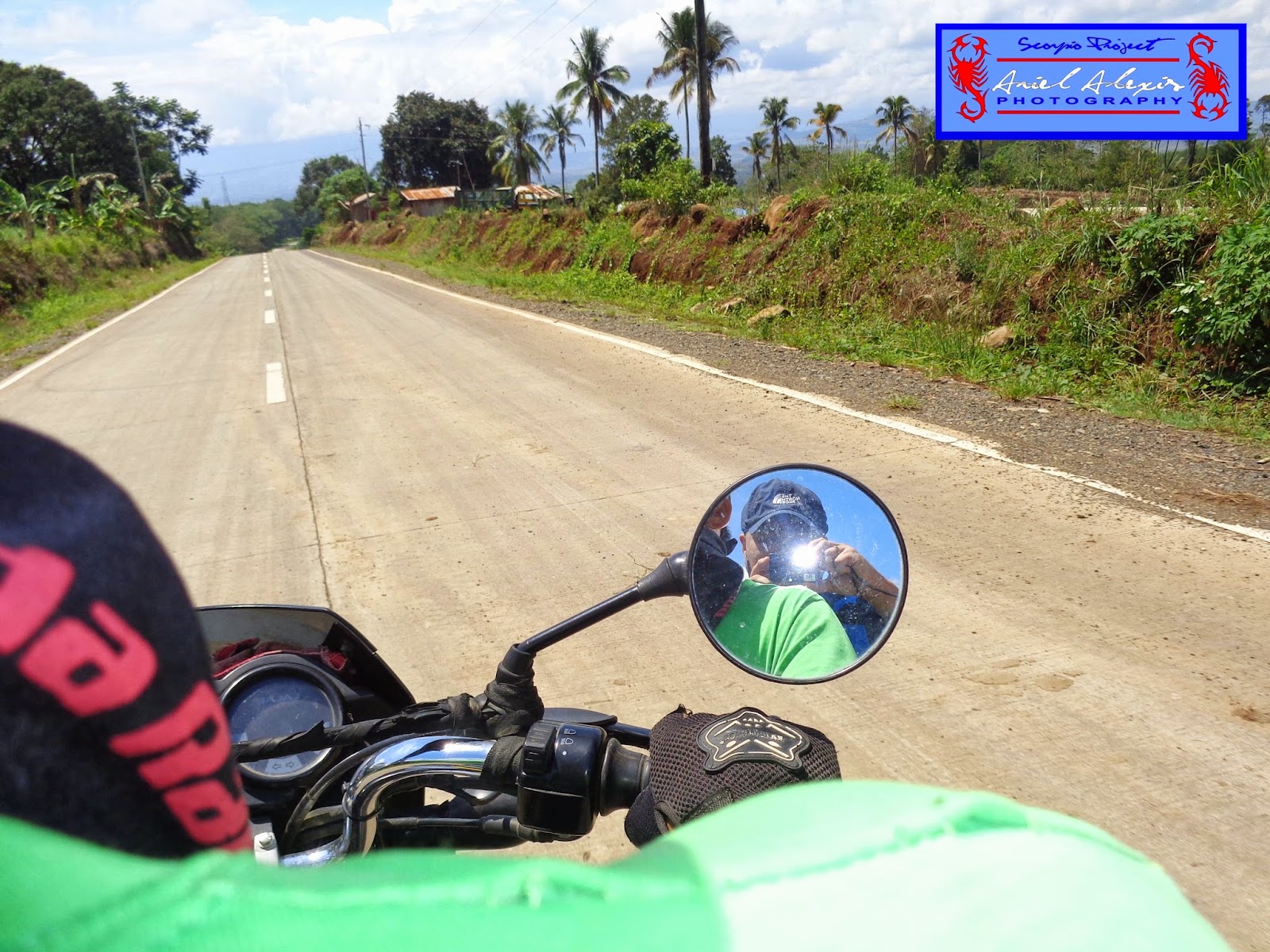
Roughly forty minutes on the road, our
daredevil of a ride came to a halt as we reached a place with a covered court,
on our right. On our left, we noticed a huge sign—“This Way to Lake Apo”—that
points visitors to the sought-after destination. A few meters away, we saw a
parking area where Meo pulled over. I went ahead and walked through a stone
pathway leading all the way to the beautiful basin. Moments later, I was
face-to-face with Lake Apo!
Roughly forty minutes on the road, our
daredevil of a ride came to a halt as we reached a place with a covered court,
on our right. On our left, we noticed a huge sign—“This Way to Lake Apo”—that
points visitors to the sought-after destination. A few meters away, we saw a
parking area where Meo pulled over. I went ahead and walked through a stone
pathway leading all the way to the beautiful basin. Moments later, I was
face-to-face with Lake Apo!
 |
My first shot at the lake
|
An elderly woman in her 60s came my way,
asking me to register in the logbook which visitors of Lake Apo had to sign.
Later, a man, who's as old as his co-villager, joined us and inquired if I’d
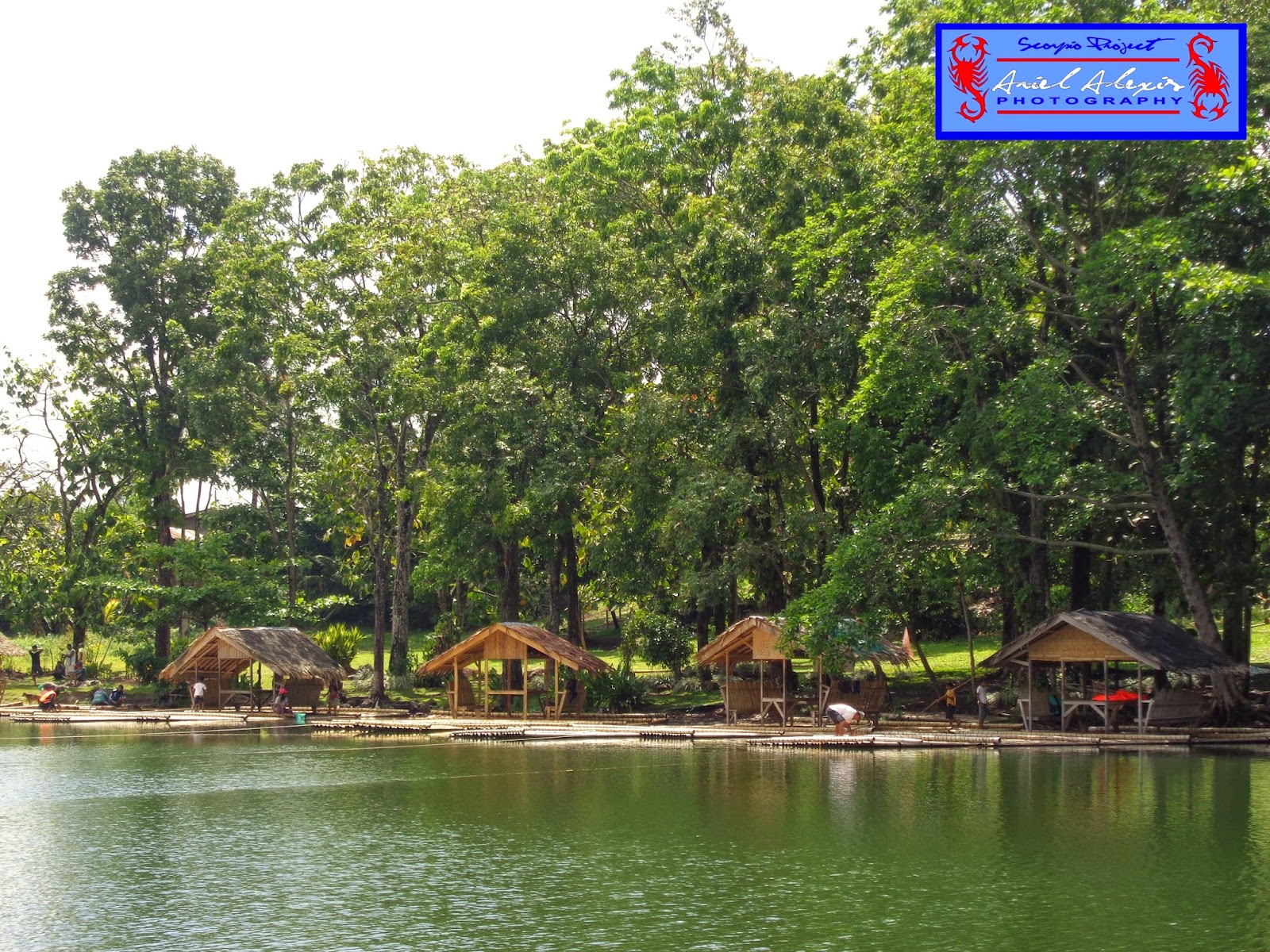
like to take a cruise aboard one of the floating cottages—rafts made of bamboo
poles and nipa shingles. Each of the rafts that are up for rent is tied to a
long rope which, in turn, is fastened to a stake at the other side of the lake.
“How much would one floating cottage cost me?”
I asked the old woman.
 |
Our floating cottage
|
 “Sir, the rent is Php230 for three hours,
including the life jackets. Then you have to add another Php100 for the
driver,” came the reply. “The fee will surely help our village in maintaining
the floating cottages and preserving the lake,” the old man (who, I assumed is
a barangay official), added.
“Sir, the rent is Php230 for three hours,
including the life jackets. Then you have to add another Php100 for the
driver,” came the reply. “The fee will surely help our village in maintaining
the floating cottages and preserving the lake,” the old man (who, I assumed is
a barangay official), added.
 “Okay,” I replied. I thought it was a good
deal. I get to bask in the beauty of the natural basin while helping the
village in its effort to keep Lake Apo in its pristine state. After paying, Meo
and I boarded the floating cottage, which was driven by a young fellow named John
Mark. Our raft boy then unleashed the vessel’s rope from the stake and started
pushing it into the water.
“Okay,” I replied. I thought it was a good
deal. I get to bask in the beauty of the natural basin while helping the
village in its effort to keep Lake Apo in its pristine state. After paying, Meo
and I boarded the floating cottage, which was driven by a young fellow named John
Mark. Our raft boy then unleashed the vessel’s rope from the stake and started
pushing it into the water.
 |
Apo's pristine beauty
|
|

 Cruising along Lake Apo turned out to be a
grandiose visual treat for this world-weary weekend warrior. As John Mark began
pulling the rope at the other end of the lake, the raft moved forward at a
leisurely pace, slowly revealing the spectacular vista of Apo as seen from our vantage
point. By the time we reached midway, I was already enamored with the lake’s
green waters and the verdant hills surrounding it.
Cruising along Lake Apo turned out to be a
grandiose visual treat for this world-weary weekend warrior. As John Mark began
pulling the rope at the other end of the lake, the raft moved forward at a
leisurely pace, slowly revealing the spectacular vista of Apo as seen from our vantage
point. By the time we reached midway, I was already enamored with the lake’s
green waters and the verdant hills surrounding it.
 |
Panoramic view of Lake Apo
|

 Stuck right there, I fell into a trance, feeling
so at peace with the universe just by gazing at my awe-inspiring surroundings—as
if a heavy cross was taken off my shoulders. Snapping out of my reverie, I
quickly held up my Nikon and started shooting at anything that fancied me.
Whew, to say that the view of the lake that time was stunning would be an
understatement!
Stuck right there, I fell into a trance, feeling
so at peace with the universe just by gazing at my awe-inspiring surroundings—as
if a heavy cross was taken off my shoulders. Snapping out of my reverie, I
quickly held up my Nikon and started shooting at anything that fancied me.
Whew, to say that the view of the lake that time was stunning would be an
understatement!
 |
A lake house at the other side of Apo
|

 For
a few hours, Meo and I lingered there, making small talk about everything and
anything under the sun. Whew, I felt a different kind of high as we killed time
right smack in the middle of a haven in the highlands—a high that lulls you
into believing all is well with the world.
For
a few hours, Meo and I lingered there, making small talk about everything and
anything under the sun. Whew, I felt a different kind of high as we killed time
right smack in the middle of a haven in the highlands—a high that lulls you
into believing all is well with the world.
Every summer has its story. This year, I got
quite a number of stories to share but it’s my Lake Apo escapade that’s made my
summer quite unforgettable. Taking one more peek at the lake, I felt a pang of
nostalgia stabbing me as I bid farewell to Apo—a bittersweet farewell, that is.
Sweet as I finally got to see one of my dream destinations in Mindanao. Bitter
in the sense that I wasn’t able to fully exploit its unspoilt beauty.
 |
Mt. Musuan as seen from Sayre National Highway
|

 As the habal-habal vroomed its way back to
downtown Valencia, the moments I spent at Lake Apo kept flashing in my mind
like scenes from some movie. Geez, the idea of pitching a tent, building a
bonfire, and waiting for the setting and rising of the sun in that quiet corner
of the world only saddened me more. So, before we finally reached the city, I
ended up making a promise: I will definitely come back to that awesome
hideaway! :-D
As the habal-habal vroomed its way back to
downtown Valencia, the moments I spent at Lake Apo kept flashing in my mind
like scenes from some movie. Geez, the idea of pitching a tent, building a
bonfire, and waiting for the setting and rising of the sun in that quiet corner
of the world only saddened me more. So, before we finally reached the city, I
ended up making a promise: I will definitely come back to that awesome
hideaway! :-D

 Out
there in the
heartland of Mindanao, where its remaining (read: endangered) forest
covers are found, lies this city that never fails to fascinate me each
time I
have the chance to visit it—Malaybalay. Aptly called the “City in a
Forest”, its
attractions have much to do with the au naturel charms of its clean and
green
surroundings.
Out
there in the
heartland of Mindanao, where its remaining (read: endangered) forest
covers are found, lies this city that never fails to fascinate me each
time I
have the chance to visit it—Malaybalay. Aptly called the “City in a
Forest”, its
attractions have much to do with the au naturel charms of its clean and
green
surroundings.  Bukidnon's capital, however, can’t boast about being on a bay, lake, river, or having a view of the sea
because it’s landlocked just like the rest of the province. So, what’s the one
thing that sets it apart from any other city of its class? What else but those
hectares upon hectares of old-growth, sturdy and lovely trees—dipterocarps,
conifers and what have you—set within a
backdrop of lofty, mist-covered mountains and hills.
Bukidnon's capital, however, can’t boast about being on a bay, lake, river, or having a view of the sea
because it’s landlocked just like the rest of the province. So, what’s the one
thing that sets it apart from any other city of its class? What else but those
hectares upon hectares of old-growth, sturdy and lovely trees—dipterocarps,
conifers and what have you—set within a
backdrop of lofty, mist-covered mountains and hills.


 Dubbed as the
“Southern Summer Capital of the Philippines”, Malaybalay was founded as a
pueblo by the Spanish colonizers in
1877. When the Americans came, the sleepy town became Bukidnon’s capital in
1907 following the latter’s establishment as a province. In 1998, Malaybalay attained its status as a
chartered city.
Dubbed as the
“Southern Summer Capital of the Philippines”, Malaybalay was founded as a
pueblo by the Spanish colonizers in
1877. When the Americans came, the sleepy town became Bukidnon’s capital in
1907 following the latter’s establishment as a province. In 1998, Malaybalay attained its status as a
chartered city. 


 When I first saw Malaybalay several years
ago, the city came across as Baguio almost two decades earlier, that is—small,
clean and green, congestion-free. Nestled at an elevation of 622 m (2,041 ft)
above sea level, Malaybalay’s climate is, of course, cool. Visitors will surely love the pine-scented,
crisp mountain air that swathes the city all year round.
When I first saw Malaybalay several years
ago, the city came across as Baguio almost two decades earlier, that is—small,
clean and green, congestion-free. Nestled at an elevation of 622 m (2,041 ft)
above sea level, Malaybalay’s climate is, of course, cool. Visitors will surely love the pine-scented,
crisp mountain air that swathes the city all year round. 
 The motorela or rela is the usual mode of transport within the city. This version
of the ubiquitous tricycle that’s common in Northern Mindanao is quite smaller
than the usual ones I saw in other Philippine cities. I took the rela on a few occasions as I opted to
leave my car at the hotel. Doing so, I guess, is the best way to acclimatize
myself with the way of living in the places I visit.
The motorela or rela is the usual mode of transport within the city. This version
of the ubiquitous tricycle that’s common in Northern Mindanao is quite smaller
than the usual ones I saw in other Philippine cities. I took the rela on a few occasions as I opted to
leave my car at the hotel. Doing so, I guess, is the best way to acclimatize
myself with the way of living in the places I visit.

 With the presence of
Bukidnon State University (BSU), Malaybalay can be considered as a university
town, not unlike Dumaguete (with Silliman and four other universities). Created
in 1924 as a two-year secondary school during the Commonwealth era, BSU became
a state university in 2007, with an estimated student population of over
11,000.
With the presence of
Bukidnon State University (BSU), Malaybalay can be considered as a university
town, not unlike Dumaguete (with Silliman and four other universities). Created
in 1924 as a two-year secondary school during the Commonwealth era, BSU became
a state university in 2007, with an estimated student population of over
11,000. Gaisano is the only
mall I saw there, but no movie houses yet. McDonald’s, Chow King and Jollibee
also have their popular presence. There are, however, several cheap dining
places spread all over town, mostly catering to students. Two dining places
that count among my favorites are Anton’s Grill and D’ Stable Eco-Park.
Gaisano is the only
mall I saw there, but no movie houses yet. McDonald’s, Chow King and Jollibee
also have their popular presence. There are, however, several cheap dining
places spread all over town, mostly catering to students. Two dining places
that count among my favorites are Anton’s Grill and D’ Stable Eco-Park.  Anton’s Grill offers probably the best
seafood fare in town. Its owners also happen to be the people behind the
popular nationwide roast chicken food chain known as Manok ni Sr. Pedro. When I had dinner there, I made sure I got to
taste the original, mouth-watering Sr.
Pedro chicken. Two thumbs up for that!
Anton’s Grill offers probably the best
seafood fare in town. Its owners also happen to be the people behind the
popular nationwide roast chicken food chain known as Manok ni Sr. Pedro. When I had dinner there, I made sure I got to
taste the original, mouth-watering Sr.
Pedro chicken. Two thumbs up for that!
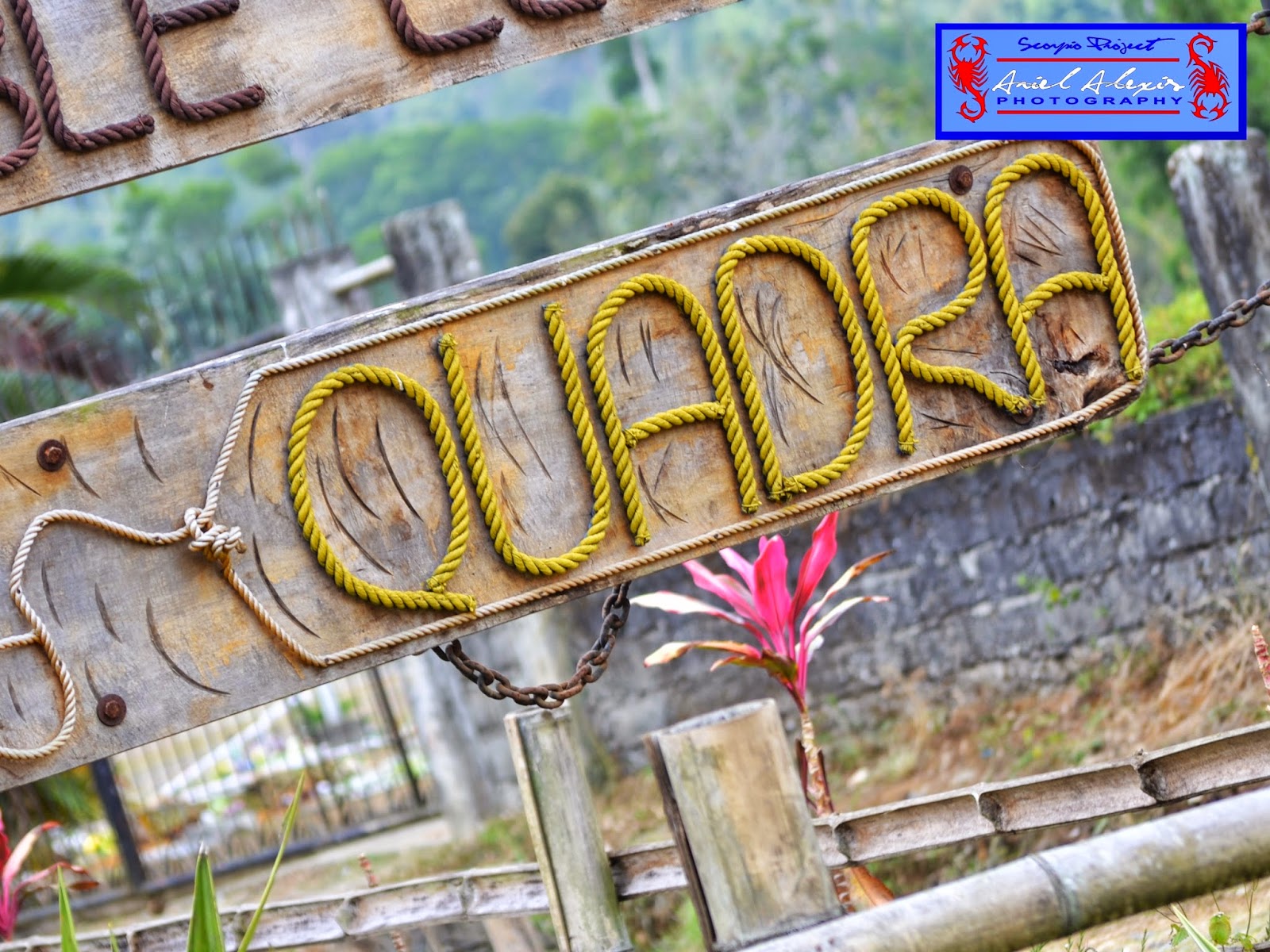
 Meanwhile, D’ Stable
Eco Resort, popularly known as Quadra, is one of the best places to satiate
your hunger. Quadra has a number of horses, stables, huts and cottages—all set
up to conjure a ranch-like ambience set amidst a verdant landscape with lofty
mountains, lush forestlands and all!
Meanwhile, D’ Stable
Eco Resort, popularly known as Quadra, is one of the best places to satiate
your hunger. Quadra has a number of horses, stables, huts and cottages—all set
up to conjure a ranch-like ambience set amidst a verdant landscape with lofty
mountains, lush forestlands and all! There are several
places to stay, mostly inns, pension houses and apartelles, all over
Malaybalay—Haus Malibu, Plaza View, Quadra, Small World, 1st Avenue, Villa
Alemania, to name some. Sadly, even the most decent one, Pine Hills Hotel, is
showing signs of deterioration. When in Bukidnon, I prefer to stay in nearby
Valencia City.
There are several
places to stay, mostly inns, pension houses and apartelles, all over
Malaybalay—Haus Malibu, Plaza View, Quadra, Small World, 1st Avenue, Villa
Alemania, to name some. Sadly, even the most decent one, Pine Hills Hotel, is
showing signs of deterioration. When in Bukidnon, I prefer to stay in nearby
Valencia City. 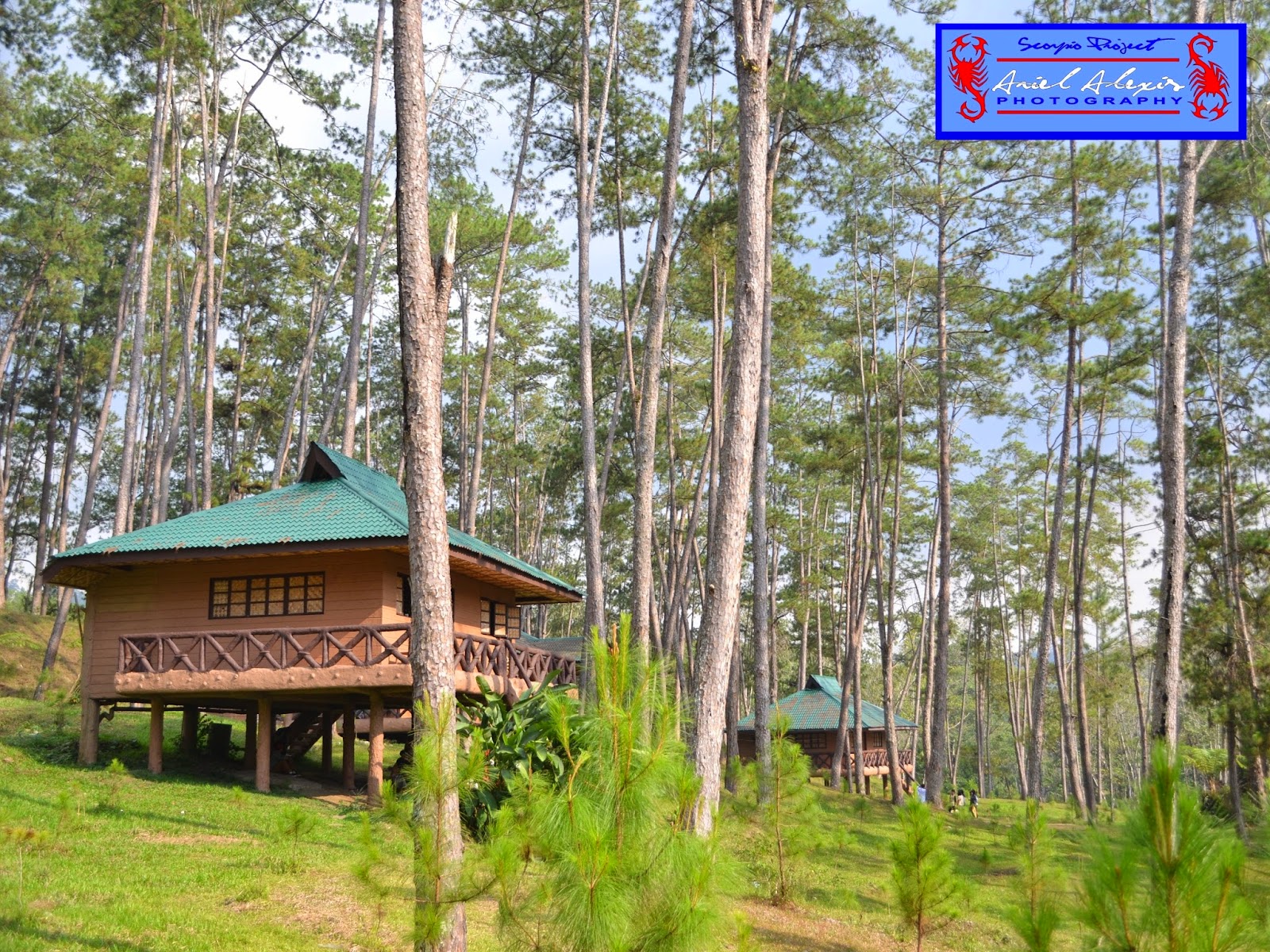

 Two of the
Malaybalay’s landmarks that I found interesting are Kaamulan Nature Park and Erreccion de Pueblo Monument. Kaamulan,
a project of the local government, was put up to honor the seven indigenous hill tribes of the
province—Bukidnon, Higaonon, Manobo, Matigsalug, Talaandig, Tigwahanon and
Umayamnon. Replicas of the different
houses of the tribes are positioned all over the complex.
Two of the
Malaybalay’s landmarks that I found interesting are Kaamulan Nature Park and Erreccion de Pueblo Monument. Kaamulan,
a project of the local government, was put up to honor the seven indigenous hill tribes of the
province—Bukidnon, Higaonon, Manobo, Matigsalug, Talaandig, Tigwahanon and
Umayamnon. Replicas of the different
houses of the tribes are positioned all over the complex.

 Erreccion de Pueblo (Creation of Town), on the other
hand, depicts the 1877 agreement between the Spanish colonizers and the local
leaders. Located within the town plaza, the monument draws a good number of
city folks who’ve found it the convenient place for meeting, talking, eating,
playing and what have you.
Erreccion de Pueblo (Creation of Town), on the other
hand, depicts the 1877 agreement between the Spanish colonizers and the local
leaders. Located within the town plaza, the monument draws a good number of
city folks who’ve found it the convenient place for meeting, talking, eating,
playing and what have you. 
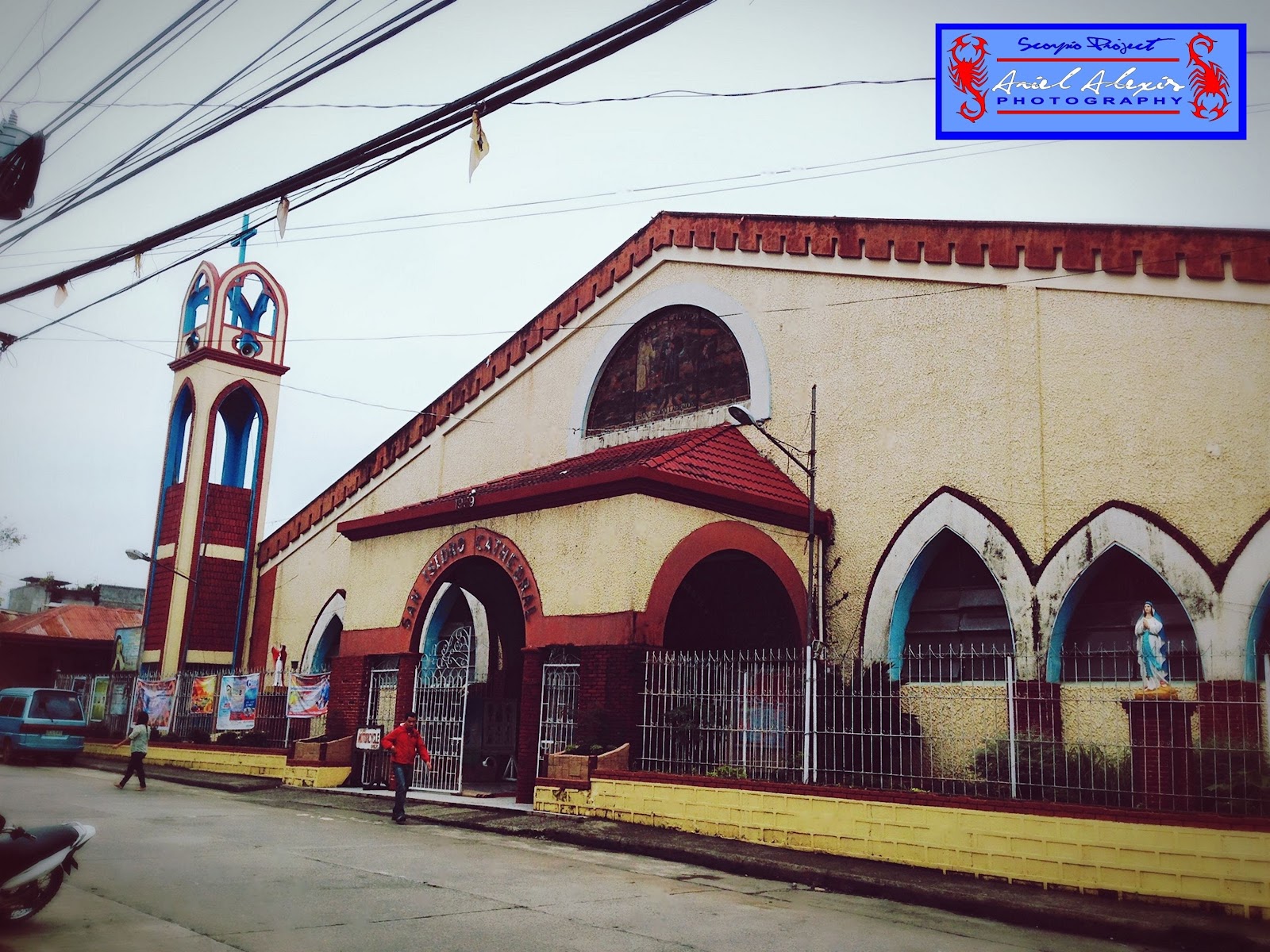 Just a stone’s throw away from the town plaza
is the Cathedral of St. Isidore the Farmer, which I also visited to say a little prayer. Built in 1969, the church has gone
several renovations through the years. The image of the patron saint encased in
stained glass adorns the church’s front wall. An icon is also found inside the
church.
Just a stone’s throw away from the town plaza
is the Cathedral of St. Isidore the Farmer, which I also visited to say a little prayer. Built in 1969, the church has gone
several renovations through the years. The image of the patron saint encased in
stained glass adorns the church’s front wall. An icon is also found inside the
church. 

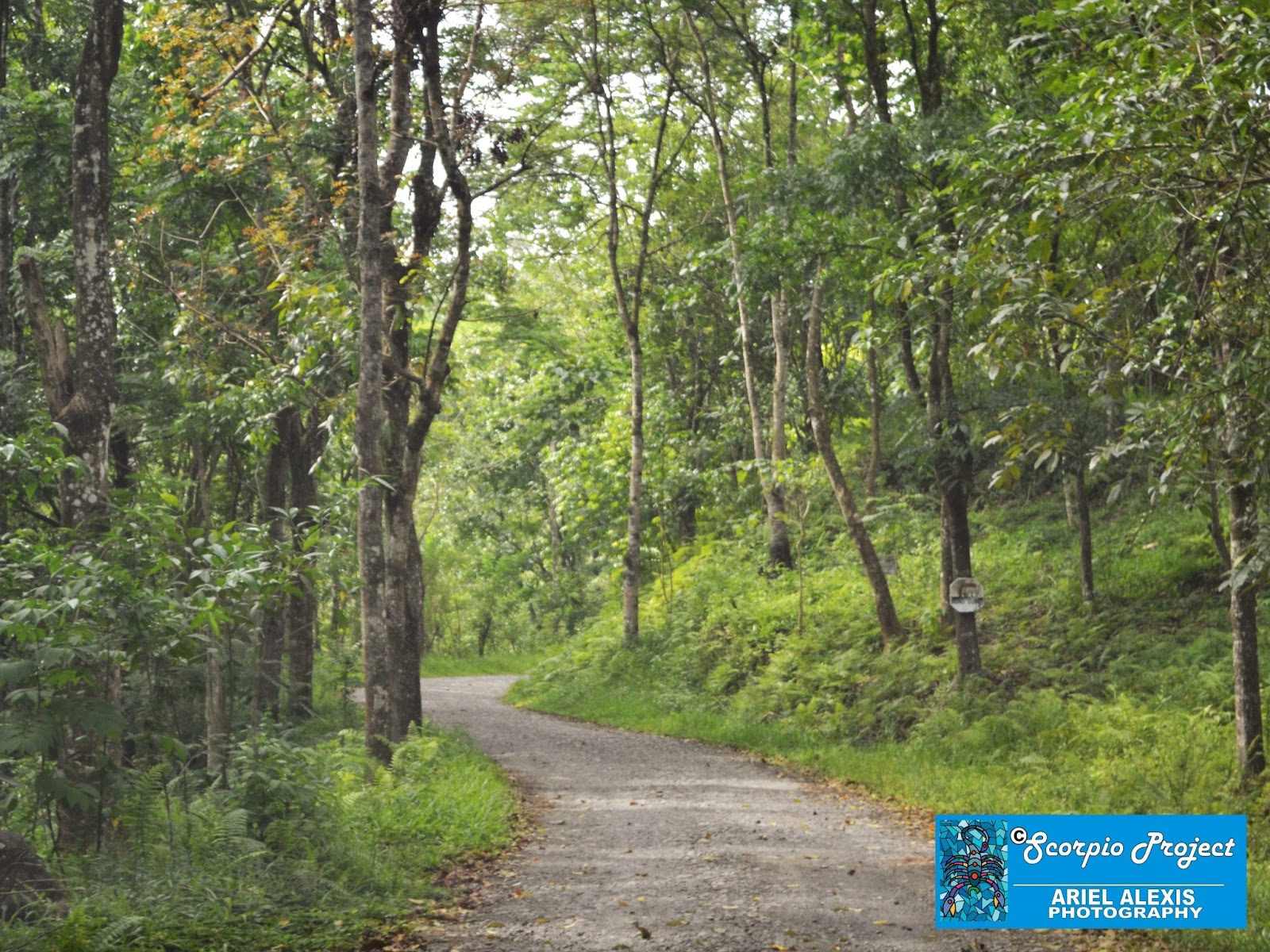
 Perhaps the crowning
glory of any sojourn to Malaybalay is a visit to the Monastery of the
Transfiguration. Neatly tucked in the village of San Jose in Malaybalay, the
monastic complex stands on a vast, slightly sloping terrain surrounded by lush
mountains and hills. I consider it a “mortal sin” for any tourist to miss this
must-see wonder.
Perhaps the crowning
glory of any sojourn to Malaybalay is a visit to the Monastery of the
Transfiguration. Neatly tucked in the village of San Jose in Malaybalay, the
monastic complex stands on a vast, slightly sloping terrain surrounded by lush
mountains and hills. I consider it a “mortal sin” for any tourist to miss this
must-see wonder. 

 Roughly twenty
minutes away from the downtown area by private car, the monastic complex has
several buildings housing the monks, a small chapel, dormitories and retreat
houses for pilgrims, and several hectares of prime lands owned by the
Benedictine Monks. Though open to the
public, visitors can only enter its premises if they are dressed in accordance
with the monks’ dress code.
Roughly twenty
minutes away from the downtown area by private car, the monastic complex has
several buildings housing the monks, a small chapel, dormitories and retreat
houses for pilgrims, and several hectares of prime lands owned by the
Benedictine Monks. Though open to the
public, visitors can only enter its premises if they are dressed in accordance
with the monks’ dress code. 

 For me, the
monastery’s most distinctive as well as renowned feature is the pyramid-shaped
church designed by the late Leandro Locsin, National Artist for
Architecture. Said to be Locsin’s last
great work before he passed away in the early 1990s, the awe-inspiring church,
which is made of lime blocks, was inaugurated some thirty years ago.
For me, the
monastery’s most distinctive as well as renowned feature is the pyramid-shaped
church designed by the late Leandro Locsin, National Artist for
Architecture. Said to be Locsin’s last
great work before he passed away in the early 1990s, the awe-inspiring church,
which is made of lime blocks, was inaugurated some thirty years ago. 

 Inside the church, I saw a replica of the
statue of Our Lady of Montserrat, which reportedly came all the way from the
Abbey of Montserrat in Catalonia, Spain. The said replica, which is one of the
Black Madonnas of Europe, was given by the Abbey of Montserrat as a gift to
commemorate the centennial of the Benedictine monks presence in the
Philippines.
Inside the church, I saw a replica of the
statue of Our Lady of Montserrat, which reportedly came all the way from the
Abbey of Montserrat in Catalonia, Spain. The said replica, which is one of the
Black Madonnas of Europe, was given by the Abbey of Montserrat as a gift to
commemorate the centennial of the Benedictine monks presence in the
Philippines. 
 So, is it nice to stay
there for good? If you want to live in a forest—yet in the city—it’s
definitely the place to be. But how long will Malaybalay stay that way, that
is, as the “City in a Forest”? Well, that, I believe, would depend to a great
extent on the actions of its people to preserve its relatively pristine state
and keep it from going the way the “City of Pines” has gone—to the dogs, that
is. :-D
So, is it nice to stay
there for good? If you want to live in a forest—yet in the city—it’s
definitely the place to be. But how long will Malaybalay stay that way, that
is, as the “City in a Forest”? Well, that, I believe, would depend to a great
extent on the actions of its people to preserve its relatively pristine state
and keep it from going the way the “City of Pines” has gone—to the dogs, that
is. :-D