Adventurer-novelist-poet
Jack Kerouac, known for his book On the Road, nailed with this quote what I
believe is the perfect mantra for weekend warriors who can only afford to
engage in epic weekend adventures: “There was nowhere to go but everywhere, so
just keep on rolling under the stars.”
 |
Bolinao Falls 1
|
 So what? You might ask. Indulge me. I’m an avid fan of this
quintessential iconoclast who’s behind several literary masterpieces regarded
as classics of the genre. I’m a bum at heart who loves to hit the road on
weekends, making spontaneous sojourns to discover something odd and novel in
destinations little known or unheard of, if only to delight my creative senses.
So what? You might ask. Indulge me. I’m an avid fan of this
quintessential iconoclast who’s behind several literary masterpieces regarded
as classics of the genre. I’m a bum at heart who loves to hit the road on
weekends, making spontaneous sojourns to discover something odd and novel in
destinations little known or unheard of, if only to delight my creative senses.
 |
Lazing around Bolinao's Balingasay River
|
That’s why this sequel to my first post on Bolinao has to have something Kerouac-ish in it. Writing this, it felt like I’ve taken on an iconoclastic stance during my solo sojourn to the resort town given that it happened during Lent, supposedly a time for self-abnegation from cravings that are carnal and mundane—that includes the itch to gad about!
 Call this sojourn then as a sweet temptation as far as this
adventure junkie is concerned; a diversion that made me depart from my original
plan of doing the rounds of Metro Manila’s old churches for my visita iglesia.
It was difficult to ignore the call of the nature that is Bolinao. Like a
seductress, once you know her, you can’t get her out of your system!
Call this sojourn then as a sweet temptation as far as this
adventure junkie is concerned; a diversion that made me depart from my original
plan of doing the rounds of Metro Manila’s old churches for my visita iglesia.
It was difficult to ignore the call of the nature that is Bolinao. Like a
seductress, once you know her, you can’t get her out of your system!
 |
The centuries-old Bolinao Church
|
 Good thing, I still managed to keep some of my spiritual
obligations even as I indulged in my secular explorations in the remote
hideaway in Pangasinan whose fabulous sunsets and fantastic attractions were
featured in numerous blogs, magazines, TV shows and even films.
Good thing, I still managed to keep some of my spiritual
obligations even as I indulged in my secular explorations in the remote
hideaway in Pangasinan whose fabulous sunsets and fantastic attractions were
featured in numerous blogs, magazines, TV shows and even films.
To get around Bolinao, I hired tricycle drivers (mind you, they
charged me modest rates for whole day tours!) who took me around the alluring
attractions in the resort town during my 4D/3N vacay. So here are some more of
the “treasures of Bolinao” which I explored to the hilt.
 |
Bolinao is blessed with numerous falls
|
Bolinao Falls 1 and 2
If there’s
one thing I least expect to find in the resort town, that would be a waterfall.
Most cascades I know can be found only in islands (e.g. Katibawasan in
Camiguin) and on mountainous terrains (e.g. Seven Falls of Lake Sebu) where
waters are expected to drop into streams, lakes and rivers. The town is far
from being like that; the surrounding areas are mostly flat and are generally
composed of farmlands.

 To my
surprise, Bolinao not only has one but several waterfalls! Three of the most
popular are eponymously named after the town (and numbered in accordance to
their distance, if I’m not mistaken). So far, I only managed to take a peek at
two of the three known waterfalls. Again, I hired a tricycle for Php1,000
(roundtrip) to take me to those falls and back to Punta Riviera.
To my
surprise, Bolinao not only has one but several waterfalls! Three of the most
popular are eponymously named after the town (and numbered in accordance to
their distance, if I’m not mistaken). So far, I only managed to take a peek at
two of the three known waterfalls. Again, I hired a tricycle for Php1,000
(roundtrip) to take me to those falls and back to Punta Riviera.
Found in
the village of Samang Norte, Bolinao Falls 1 is at least 20 kilometers away
from the town proper and takes between 30-45 minutes to reach, depending on
your ride. The road going to the falls is mostly unpaved, dusty and quite
stony, with so few paved stretches. Good thing, I brought along a towel to
cover my face; otherwise, I could have been coated with dust by the end of the
ride!
The first falls can be reached through a short hike—less than five
minutes—from a clearing which also doubles as a parking area for vehicles.
Visitors need to descend through an old stone stairway. On the way down, you’ll
be greeted by the noisy murmuring of Bolinao Falls.
There was
nothing spectacular about the falls that time. The drop was rather moderate
since it’s summer. There was hardly any current in the wide basin below it. The
water in the natural pool is shallow at first but gets deep quickly as you
start heading towards the middle. Still, there were a lot of swimmers enjoying
the cool waters.

 Too bad,
the place was teeming with people when I came. All the makeshift cottages were
crawling with tourists! I didn’t linger for all I wanted was to take a few shots
of the falls. Quickly, I took out my
Nikon and began capturing the natural beauty of Bolinao Falls 1. What caught my
fancy were the intrepid young people, mostly in their teens, who dared to jump
from the top of the 20-foot cascades—such daredevils!
Too bad,
the place was teeming with people when I came. All the makeshift cottages were
crawling with tourists! I didn’t linger for all I wanted was to take a few shots
of the falls. Quickly, I took out my
Nikon and began capturing the natural beauty of Bolinao Falls 1. What caught my
fancy were the intrepid young people, mostly in their teens, who dared to jump
from the top of the 20-foot cascades—such daredevils!

 From the
first falls, the driver took me to the second one, which is located several
meters away. To get to the falls, you’d have to go down a flight of makeshift
stairs made from dirt and bamboo poles. Good thing, it was summer when I went
there. Otherwise, it would be one difficult descent if the path were muddy
during the rainy season.
From the
first falls, the driver took me to the second one, which is located several
meters away. To get to the falls, you’d have to go down a flight of makeshift
stairs made from dirt and bamboo poles. Good thing, it was summer when I went
there. Otherwise, it would be one difficult descent if the path were muddy
during the rainy season.
 |
Bolinao Falls 2
|
Also, you’d
have to cross some short bamboo bridges that were attached to the rocks strewn
all over the stream before finally seeing the second falls. There were several
trees along the rocky landscape to shield yourself during the quick trek.
 Unlike the first one, Bolinao Falls 2 is
rather short and small. But the sight of it was enough to take my breath away.
Like the first falls, it was also crawling with summer frolickers. Several
daredevils were also taking a plunge into water by jumping from the top of the
falls.
Unlike the first one, Bolinao Falls 2 is
rather short and small. But the sight of it was enough to take my breath away.
Like the first falls, it was also crawling with summer frolickers. Several
daredevils were also taking a plunge into water by jumping from the top of the
falls.
 |
Bathers at Bolinao Falls 2
|

 Like the
first one, I guess the second one also goes down deep as there were several
rubber floaters where many of the bathers clang to. I then took some pictures
of the falls for posterity’s sake and then went back to the resort.
Like the
first one, I guess the second one also goes down deep as there were several
rubber floaters where many of the bathers clang to. I then took some pictures
of the falls for posterity’s sake and then went back to the resort.
Enchanted Cave Resort
Weekend
warriors who’ve made it to Bolinao before would surely agree with me that the
so-called Enchanted Cave Resort in the village of Patar is a must-see when
you’re in town. There’s something mystical about this oft-visited destination
that never fails to attract huge throngs of visitors whose numbers double
during holidays and weekends. Missing it will make your trip to Bolinao
somewhat incomplete.

 Like some
of the caves I’ve visited in the past, this natural wonder that has been
developed into a resort boasts of an underground lagoon with freshwater within
its womb. From what I’ve gathered, it is estimated to be around 6 ft on the
average, with a maximum depth of something like 8 ft at the middle of the pool.
Like some
of the caves I’ve visited in the past, this natural wonder that has been
developed into a resort boasts of an underground lagoon with freshwater within
its womb. From what I’ve gathered, it is estimated to be around 6 ft on the
average, with a maximum depth of something like 8 ft at the middle of the pool.
 |
Swimmers enjoying Enchanted Cave's underground pool
|
From the
accounts of those who’ve taken a dip into the underground pool, I must say that
it was invigorating to say the least, based on the unrestrained laughter and
shrieks of the swimmers who took the dare and plunged into its mysterious
depths.
 What makes
the cave “enchanted”? Perhaps you’d understand it better if you yourself
explore its inner sanctums and dive into the crystal clear pool. Personally, I
felt that the name justifies it and it isn’t all just hype. When I got inside
that eerie cave, I felt spellbound, wondering how that wonderful natural
feature came to be.
What makes
the cave “enchanted”? Perhaps you’d understand it better if you yourself
explore its inner sanctums and dive into the crystal clear pool. Personally, I
felt that the name justifies it and it isn’t all just hype. When I got inside
that eerie cave, I felt spellbound, wondering how that wonderful natural
feature came to be.

I think
what makes the cave extraordinary is the trail of hundreds of corals that have
been transformed into rocks over time scattered all over the resort’s vicinity.
One of the resort guides told me that millions of years ago, Bolinao was under
the sea; the fossilized giant clams locally known as taklobo found all over the
place proves it. The underground lagoon itself is supposedly a result of the
evolution. Now, don’t you find that enchanting?
 Patar Rock Formations
From the
cave, I stopped by Rock View Beach Resort, which is said to be packing in the
crowds because of its unique attraction not found elsewhere in Patar. I
hesitated at first as this wasn’t part of the itinerary that I agreed upon with
the driver who took me there. He was so insistent that I had no choice but to
relent.
 Giving the
fellow the benefit of the doubt, I went inside the beach resort which was
crowded that time. According to him, some scenes from local films like Ang Pinakamagandang Hayop sa Balat ng Lupa and Dyesebel
were reportedly shot on those rocks way back in the 1990s.
Giving the
fellow the benefit of the doubt, I went inside the beach resort which was
crowded that time. According to him, some scenes from local films like Ang Pinakamagandang Hayop sa Balat ng Lupa and Dyesebel
were reportedly shot on those rocks way back in the 1990s.
 |
Patar Rock Formations
|

 So what? Spare me the baloney, I
whispered as I tried to hide my exasperation at his insistence which cost me
Php70 as entrance fee to the beach resort. Geez,
is the fellow trying to hoodwink me to see something I’m not interested in just
to get his take?
So what? Spare me the baloney, I
whispered as I tried to hide my exasperation at his insistence which cost me
Php70 as entrance fee to the beach resort. Geez,
is the fellow trying to hoodwink me to see something I’m not interested in just
to get his take?

 Stepping
inside the resort, I didn’t see anything fancy, except for the fully booked
open-air nipa huts (which you can rent for an overnight stay), the powdery
white-sand strip, the inviting waters of the West Philippine Sea or WPS (a.k.a.
South China Sea) and several clusters of beach habitués engaged in their own
thing—sleeping, eating, talking, playing, meditating, sound-tripping and what
have you.
Stepping
inside the resort, I didn’t see anything fancy, except for the fully booked
open-air nipa huts (which you can rent for an overnight stay), the powdery
white-sand strip, the inviting waters of the West Philippine Sea or WPS (a.k.a.
South China Sea) and several clusters of beach habitués engaged in their own
thing—sleeping, eating, talking, playing, meditating, sound-tripping and what
have you.


And before
I knew it, I caught them staring at me in the face, seemingly asking me why I
didn’t want to see them—the formidable assemblage of huge coral rocks that seem
to hold their own against the unrelenting assaults of big waves coming in from
the deep waters of the WPS. Geez, this is it! Whew, what a sight to behold!
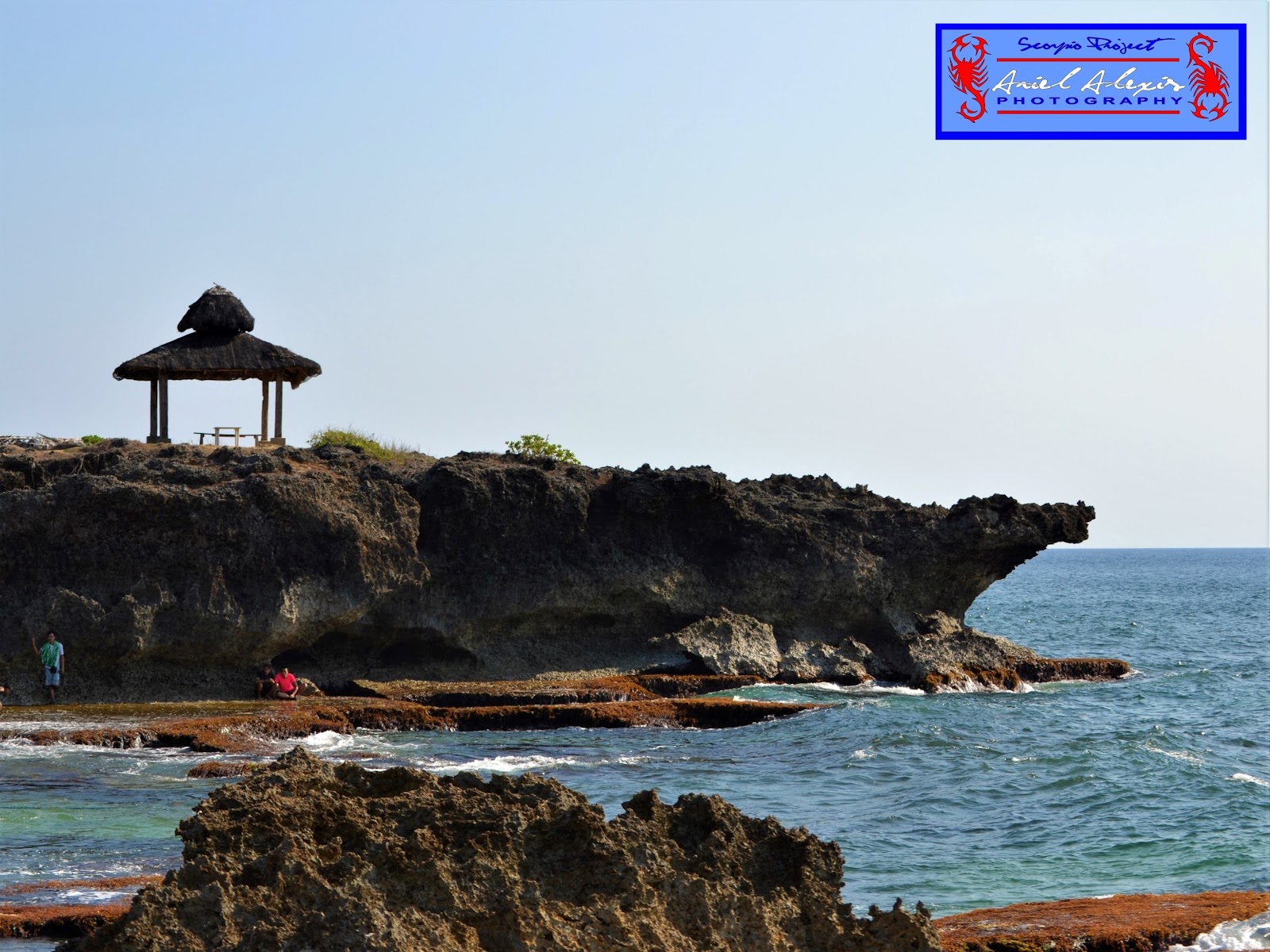
 Collectively
called the Patar Rock Formations, the stunning rocks that formed into
strange-looking little promontories jutting out into the sea caught me by
surprise. Some were detached from the beach and looked like islets of gigantic
corals. Much to my delight, they were the best thing I’ve ever seen in Bolinao
that day!
Collectively
called the Patar Rock Formations, the stunning rocks that formed into
strange-looking little promontories jutting out into the sea caught me by
surprise. Some were detached from the beach and looked like islets of gigantic
corals. Much to my delight, they were the best thing I’ve ever seen in Bolinao
that day!


Not too
many tourists knew about these rock formations as this is usually not part of
the tour package being promoted by the local tourism office. Whoa, I wanted to
give the driver a big hug for taking me there! The breathtaking vista stretches
to several kilometers of picturesque rocky formations that are surely a treat
to nature photography buffs.


For the
next several minutes, I did nothing but point, focus, and click until I felt I
had enough pics of those rocks. Mind you, you’ll never get tired of capturing
the raw beauty of Patar’s awesome rocks—they simply rock!

Patar White
Beach
Found on
the western coast along the West Philippine Sea (WPS) southwest of the poblacion, Patar White Beach is blessed
with one of the longest white stretches I’ve ever seen in the country, sloping
gradually from the shore to the sea, making it the perfect beach for swimming,
snorkeling, skim boarding, scuba diving, sailing and what have you.
 |
Patar White Beach
|
Open to the
public, the beach has remained clean and serene except perhaps during holidays
and weekends when large crowds of people from as far as Metro Manila gravitate
towards Bolinao for some sun, sea and sand in that part of the country. When I
came, Patar Beach was like that—teeming with people from all walks of life.
 What makes the beach kinda unique is its
location which is where the Lingayen Gulf meets the WPS. Patar’s strip, which
boasts of creamy white sand and the aquamarine water that washes ashore, make
it one of the best, if not, the best beach in the whole province. That’s why I
keep on referring to Bolinao as the “Beach Capital of Pangasinan.”
What makes the beach kinda unique is its
location which is where the Lingayen Gulf meets the WPS. Patar’s strip, which
boasts of creamy white sand and the aquamarine water that washes ashore, make
it one of the best, if not, the best beach in the whole province. That’s why I
keep on referring to Bolinao as the “Beach Capital of Pangasinan.”
 |
Beach bums strolling the white stretch
|

I explored
the place and took some snaps of the beach scenes. Toddlers struggling to walk
perhaps for the first time on the sand. Kids building their white castles using
sand, starfish, shells, seaweeds and whatnots. Beach bums strolling to and fro
the pristine stretch. Friends and lovers frolicking in the cool waters. Family
members straining their vocal chords to a tune coming from some portable
videoke.
 The scorching rays of the summer sun were fast becoming
unbearable. I fled to Punta Riviera for lack of any available shed to shield
myself from the heat. Every cottage there was occupied to the hilt! How I
wanted to stay much longer so I can capture the sunset in that part of Bolinao
but it was still several hours before the sun dies.
The scorching rays of the summer sun were fast becoming
unbearable. I fled to Punta Riviera for lack of any available shed to shield
myself from the heat. Every cottage there was occupied to the hilt! How I
wanted to stay much longer so I can capture the sunset in that part of Bolinao
but it was still several hours before the sun dies.
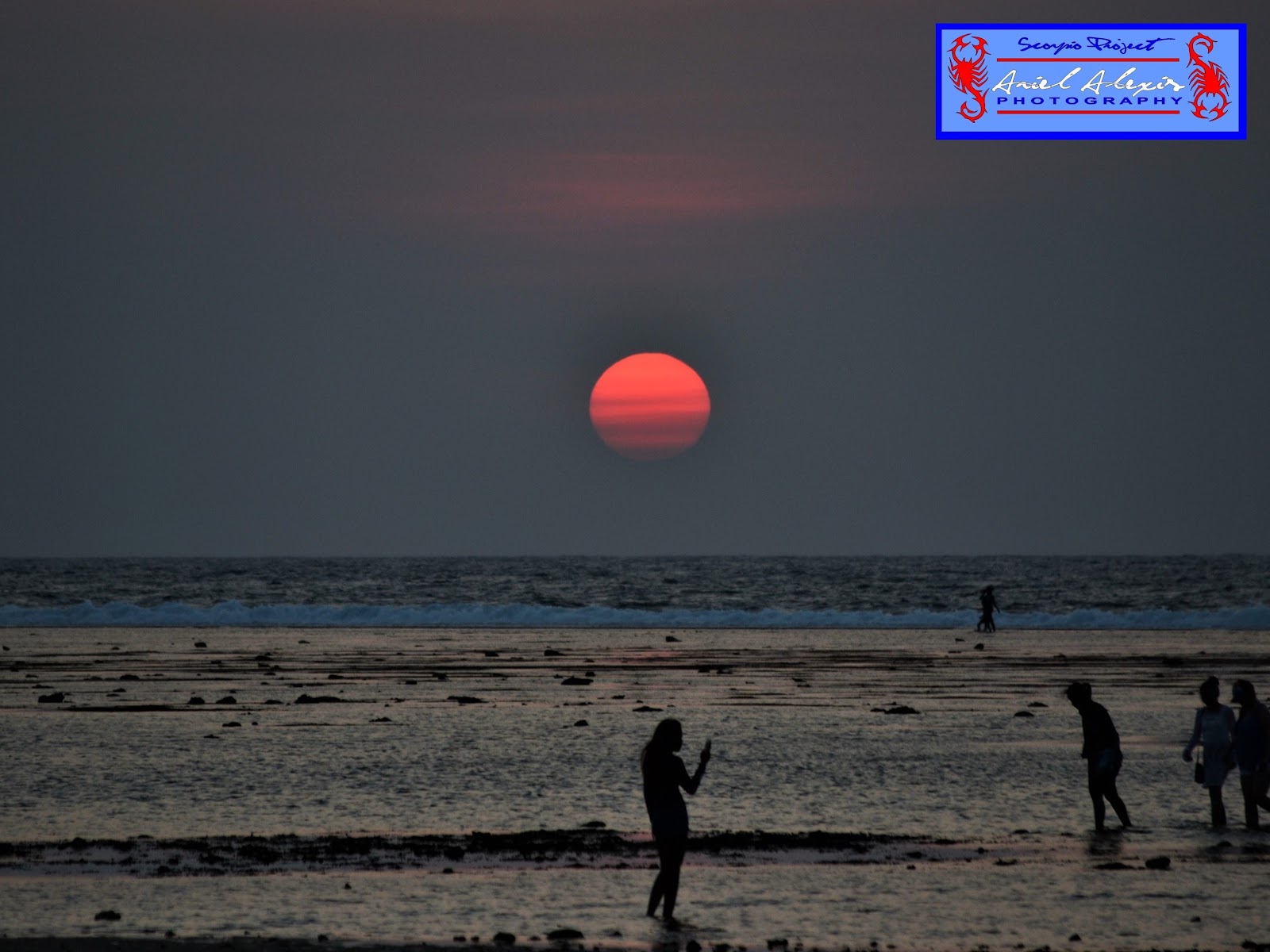
It was past five in the afternoon when I woke up from a late
afternoon nap. I quickly rose and headed for the beach to catch the
awe-inspiring phenomenon before it disappeared. At the end of a long day,
there’s nothing more relaxing than the sight of Bolinao’s fabulous sunset.
Standing on
the creamy white sands of Punta Riviera, I caught it once again. Armed with my
camera, I captured as many shots as I could as the dying embers of the sun
painted the sky with a kaleidoscope of summer’s colors—golden yellow, bright
orange, flaming red, hot pink and electric purple.
In
silence, I thanked God for the sojourn to the picturesque town and the chance
to explore some of its awe-inspiring treasures, including that rare moment to
gaze at one of His most phenomenal spectacles.
As dusk began to envelop the
beach, I walked back to my cottage, my head bursting with so many thoughts
about the things I’m going to write about Bolinao. 😃

 Scale
new heights, swim in turquoise waters and scamper to a new place I’ve never
been were among the things I wanted to do as summer began. So far, I was
able to push through with the last two summer goals last March and April,
respectively, except for the first one. Some unfounded fear kept me from pursuing
it. I haven’t scaled a peak the past three years, and that, I believe, has
created a deep hole of doubt in me—so deep I dreamed about dying during a trek!
Scale
new heights, swim in turquoise waters and scamper to a new place I’ve never
been were among the things I wanted to do as summer began. So far, I was
able to push through with the last two summer goals last March and April,
respectively, except for the first one. Some unfounded fear kept me from pursuing
it. I haven’t scaled a peak the past three years, and that, I believe, has
created a deep hole of doubt in me—so deep I dreamed about dying during a trek!


 Chances are, the Chocolate Hills of Bohol would most likely cross your mind the moment you lay eyes on the Mantalongon mountain range. The hills in the latter, however, are thinner, sharper and craggier. Unlike the Chocolate Hills, the peaks of the Mantalongon range are assembled near each other. I surmised that they must have been huge corals that rose up so high from under the sea millions of years ago.
  Why
do I like scaling peaks and mountains? Well, there’s something about them
that’s worth all the effort. To borrow the words of John Muir, Scottish-American
author and environmental philosopher: “Keep close to Nature's heart... and
break clear away, once in a while, and climb a mountain or spend a week in the
woods. Wash your spirit clean.” And climb Osmeña Peak I did “to wash my spirit
clean”. I guess I needed some “washing” if only to scrub out self-doubt.
Why
do I like scaling peaks and mountains? Well, there’s something about them
that’s worth all the effort. To borrow the words of John Muir, Scottish-American
author and environmental philosopher: “Keep close to Nature's heart... and
break clear away, once in a while, and climb a mountain or spend a week in the
woods. Wash your spirit clean.” And climb Osmeña Peak I did “to wash my spirit
clean”. I guess I needed some “washing” if only to scrub out self-doubt. It
was a hot Saturday when I finally embarked on my trek. Waking up early, I took
a quick shower, skipped breakfast and messaged Grab for a cab. Around 7 AM, I
was on my way to Cebu South Terminal. Arriving there, I was dismayed to see several
long queues waiting for the buses that will take them to various destinations.
On weekends, the terminal is usually packed with passengers going home to the
southern towns of Cebu and even to those in nearby Negros Island.
It
was a hot Saturday when I finally embarked on my trek. Waking up early, I took
a quick shower, skipped breakfast and messaged Grab for a cab. Around 7 AM, I
was on my way to Cebu South Terminal. Arriving there, I was dismayed to see several
long queues waiting for the buses that will take them to various destinations.
On weekends, the terminal is usually packed with passengers going home to the
southern towns of Cebu and even to those in nearby Negros Island. 
 Ignoring
the grumblings of my tummy, I decided to head straight for my ultimate
destination instead of having lunch first. I bought some stuff though from a
7-Eleven outlet at the town’s junction, intending to eat them later when I’m
already at the mountain’s summit. To get to the peak, I hired a motorcycle taxi
locally known as habal-habal, plying
the route from downtown Dalaguete to the upland village of Mantalongon, the
jump-off point for the peak.
Ignoring
the grumblings of my tummy, I decided to head straight for my ultimate
destination instead of having lunch first. I bought some stuff though from a
7-Eleven outlet at the town’s junction, intending to eat them later when I’m
already at the mountain’s summit. To get to the peak, I hired a motorcycle taxi
locally known as habal-habal, plying
the route from downtown Dalaguete to the upland village of Mantalongon, the
jump-off point for the peak.
 The
smooth ride along the zigzagging but well-paved Dalaguete-Badian Road passing
through Mantalongon treated me to a picturesque montage of the countryside—lush
mountains, rolling hills, steep cliffs, green veggie patches, quaint little huts
and charming rest houses and a whole lot more. About 45 minutes later, we
reached the base or jump-off point where visitors—I was among the throngs who
were mostly backpackers and hikers from Luzon—are made to sign at the Osmeña
Peak Tourism Center. Entrance fee is Php30 per person.
The
smooth ride along the zigzagging but well-paved Dalaguete-Badian Road passing
through Mantalongon treated me to a picturesque montage of the countryside—lush
mountains, rolling hills, steep cliffs, green veggie patches, quaint little huts
and charming rest houses and a whole lot more. About 45 minutes later, we
reached the base or jump-off point where visitors—I was among the throngs who
were mostly backpackers and hikers from Luzon—are made to sign at the Osmeña
Peak Tourism Center. Entrance fee is Php30 per person. Local guides often approach visitors, offering to show you the way to the peak for a fee, of course. It wouldn’t hurt your pocket to give something to augment the income of the locals, most of whom seem to live below the poverty line. I got the services of an older guide named Boy. About Php150 would suffice as guide’s fee but I gave him Php200 because he also doubled as porter and photographer.
 On
our way to the top, Boy told me that the peak was discovered by no less than
President Sergio Osmeña, Sr., the country's third president. Osmeña, a native
of Cebu, often had his plane landed there. Boy also mentioned that the boulder
where I posed for some pictures used to be a cornerstone bearing an inscription
about the late president’s discovery of the peak. I'm not sure though how
accurate his account was. Nonetheless, I enjoyed to the hilt that quick escape
to one of Cebu's highest points.
On
our way to the top, Boy told me that the peak was discovered by no less than
President Sergio Osmeña, Sr., the country's third president. Osmeña, a native
of Cebu, often had his plane landed there. Boy also mentioned that the boulder
where I posed for some pictures used to be a cornerstone bearing an inscription
about the late president’s discovery of the peak. I'm not sure though how
accurate his account was. Nonetheless, I enjoyed to the hilt that quick escape
to one of Cebu's highest points. If there’s one important
thing I gained from my trek to Osmeña Peak, it is this: That somewhere between
my soul and that highland hideaway, after all the starts and stops, the doubts
and the drifts, the sunburn, the sweat and thirst, swollen feet, sore muscles
and all, I’ve proven to myself that I still got what it takes to scale new
heights (although not as high as the other ones I’ve trekked before) and
stumbled upon a little bit of bliss up there where the sun kisses the jagged
hills. John Muir was right. We all need some “washing of the spirit” if only to
become bigger, better and bolder versions of our old selves. 🤣🤣🤣
If there’s one important
thing I gained from my trek to Osmeña Peak, it is this: That somewhere between
my soul and that highland hideaway, after all the starts and stops, the doubts
and the drifts, the sunburn, the sweat and thirst, swollen feet, sore muscles
and all, I’ve proven to myself that I still got what it takes to scale new
heights (although not as high as the other ones I’ve trekked before) and
stumbled upon a little bit of bliss up there where the sun kisses the jagged
hills. John Muir was right. We all need some “washing of the spirit” if only to
become bigger, better and bolder versions of our old selves. 🤣🤣🤣


 Why
do I like scaling peaks and mountains? Well, there’s something about them
that’s worth all the effort. To borrow the words of John Muir, Scottish-American
author and environmental philosopher: “Keep close to Nature's heart... and
break clear away, once in a while, and climb a mountain or spend a week in the
woods. Wash your spirit clean.” And climb Osmeña Peak I did “to wash my spirit
clean”. I guess I needed some “washing” if only to scrub out self-doubt.
Why
do I like scaling peaks and mountains? Well, there’s something about them
that’s worth all the effort. To borrow the words of John Muir, Scottish-American
author and environmental philosopher: “Keep close to Nature's heart... and
break clear away, once in a while, and climb a mountain or spend a week in the
woods. Wash your spirit clean.” And climb Osmeña Peak I did “to wash my spirit
clean”. I guess I needed some “washing” if only to scrub out self-doubt.


 Ignoring
the grumblings of my tummy, I decided to head straight for my ultimate
destination instead of having lunch first. I bought some stuff though from a
7-Eleven outlet at the town’s junction, intending to eat them later when I’m
already at the mountain’s summit. To get to the peak, I hired a motorcycle taxi
locally known as habal-habal, plying
the route from downtown Dalaguete to the upland village of Mantalongon, the
jump-off point for the peak.
Ignoring
the grumblings of my tummy, I decided to head straight for my ultimate
destination instead of having lunch first. I bought some stuff though from a
7-Eleven outlet at the town’s junction, intending to eat them later when I’m
already at the mountain’s summit. To get to the peak, I hired a motorcycle taxi
locally known as habal-habal, plying
the route from downtown Dalaguete to the upland village of Mantalongon, the
jump-off point for the peak.

 The
smooth ride along the zigzagging but well-paved Dalaguete-Badian Road passing
through Mantalongon treated me to a picturesque montage of the countryside—lush
mountains, rolling hills, steep cliffs, green veggie patches, quaint little huts
and charming rest houses and a whole lot more. About 45 minutes later, we
reached the base or jump-off point where visitors—I was among the throngs who
were mostly backpackers and hikers from Luzon—are made to sign at the Osmeña
Peak Tourism Center. Entrance fee is Php30 per person.
The
smooth ride along the zigzagging but well-paved Dalaguete-Badian Road passing
through Mantalongon treated me to a picturesque montage of the countryside—lush
mountains, rolling hills, steep cliffs, green veggie patches, quaint little huts
and charming rest houses and a whole lot more. About 45 minutes later, we
reached the base or jump-off point where visitors—I was among the throngs who
were mostly backpackers and hikers from Luzon—are made to sign at the Osmeña
Peak Tourism Center. Entrance fee is Php30 per person.
 Local guides often approach visitors, offering to show you the way to the peak for a fee, of course. It wouldn’t hurt your pocket to give something to augment the income of the locals, most of whom seem to live below the poverty line. I got the services of an older guide named Boy. About Php150 would suffice as guide’s fee but I gave him Php200 because he also doubled as porter and photographer.


 On
our way to the top, Boy told me that the peak was discovered by no less than
President Sergio Osmeña, Sr., the country's third president. Osmeña, a native
of Cebu, often had his plane landed there. Boy also mentioned that the boulder
where I posed for some pictures used to be a cornerstone bearing an inscription
about the late president’s discovery of the peak. I'm not sure though how
accurate his account was. Nonetheless, I enjoyed to the hilt that quick escape
to one of Cebu's highest points.
On
our way to the top, Boy told me that the peak was discovered by no less than
President Sergio Osmeña, Sr., the country's third president. Osmeña, a native
of Cebu, often had his plane landed there. Boy also mentioned that the boulder
where I posed for some pictures used to be a cornerstone bearing an inscription
about the late president’s discovery of the peak. I'm not sure though how
accurate his account was. Nonetheless, I enjoyed to the hilt that quick escape
to one of Cebu's highest points.
 If there’s one important
thing I gained from my trek to Osmeña Peak, it is this: That somewhere between
my soul and that highland hideaway, after all the starts and stops, the doubts
and the drifts, the sunburn, the sweat and thirst, swollen feet, sore muscles
and all, I’ve proven to myself that I still got what it takes to scale new
heights (although not as high as the other ones I’ve trekked before) and
stumbled upon a little bit of bliss up there where the sun kisses the jagged
hills. John Muir was right. We all need some “washing of the spirit” if only to
become bigger, better and bolder versions of our old selves. 🤣🤣🤣
If there’s one important
thing I gained from my trek to Osmeña Peak, it is this: That somewhere between
my soul and that highland hideaway, after all the starts and stops, the doubts
and the drifts, the sunburn, the sweat and thirst, swollen feet, sore muscles
and all, I’ve proven to myself that I still got what it takes to scale new
heights (although not as high as the other ones I’ve trekked before) and
stumbled upon a little bit of bliss up there where the sun kisses the jagged
hills. John Muir was right. We all need some “washing of the spirit” if only to
become bigger, better and bolder versions of our old selves. 🤣🤣🤣