Bienvenidos!
From the time you see this
word printed on a large billboard at the airport terminal's main building, you
realize you're just a few steps away from exploring one of the Philippines'
oldest cities, a place that's blessed with a rich historical and cultural heritage
quite unlike any other. And that’s none other than Zamboanga, dubbed by its
drumbeaters as Asia’s Latin City.
 I guess the tagline’s no
exaggeration. For there indeed is a delightful slice of the Spanish heartland’s
fervor and flamboyance right smack in the western tip of Mindanao. And nowhere
in the country could you find the legacy of Spain’s more than 300-year reign so
deeply ingrained than in Zamboanga, whose name was derived from the Malay word jambangan, a "place of
flowers".
I guess the tagline’s no
exaggeration. For there indeed is a delightful slice of the Spanish heartland’s
fervor and flamboyance right smack in the western tip of Mindanao. And nowhere
in the country could you find the legacy of Spain’s more than 300-year reign so
deeply ingrained than in Zamboanga, whose name was derived from the Malay word jambangan, a "place of
flowers".
It’s a legacy that’s
intricately woven into the Hispanic architecture of old houses and buildings,
in the formidable walls of historic Fort Pilar and its shrine, in the
aristocratic mien of the Zamboangueños, and, of course, in that lyrical lingua
franca, Chavacano, which is an interesting potpourri of Spanish, Tagalog,
Ilocano, Hiligaynon, Tausug, and other Pinoy dialects.
 For history buffs like me
who want to travel back to the days of Spanish Philippines, Zamboanga is
definitely the place to be. Just listening to the locals speak Chavacano truly
made me feel like I was either in Spain, Mexico, Argentina or some other Latin
American country. And after zooming in on her breathtaking scenery, feasting on
her delectable cuisine, and touching base with her people, this incorrigible viajero felt as if he had traveled to a
distinctively unique corner of the world. Truly, Zamboanga rocks!
For history buffs like me
who want to travel back to the days of Spanish Philippines, Zamboanga is
definitely the place to be. Just listening to the locals speak Chavacano truly
made me feel like I was either in Spain, Mexico, Argentina or some other Latin
American country. And after zooming in on her breathtaking scenery, feasting on
her delectable cuisine, and touching base with her people, this incorrigible viajero felt as if he had traveled to a
distinctively unique corner of the world. Truly, Zamboanga rocks!
But I must admit that this
wasn’t exactly my initial impression of the city. Time was when she struck me
as some highly volatile danger zone that serves as crime laboratory for
terrorists, extremists and their ilk. I also thought then that anyone who went
to that place ran the risk of being kidnapped by the dreaded Abu Sayyaf.
Can’t blame me (and many
others) for thinking that way. Bad—and, if I may add, irresponsible—press has a
way of shaping the way we sometimes view people, events and places. My short
but sweet visit to the City of Flowers, however, changed all that. Now, I look
at Zamboanga more positively, that is, as one of the country’s most charming,
fastest-growing and worth visiting metropolises, offering tourists a number of
surprises that wouldn’t give them any reason to get bored while they’re there.
Indeed, Asia’s Latin City is
muy fabulosa! So, for extranjeros out there who want to know what’s in store
for them if they visit our Little Spain, here are some activities you’d most
likely enjoy pursuing:
Stroll
around
town. A good starting point would be Paseo del Mar. By day, this sprawling
seaside promenade (which struck me as Zamboanga’s version of Manila’s Baywalk)
offers stunning vistas of the city’s awesome seascape. It’s best to visit the
park in the mid or late afternoons so you can catch a panoramic glimpse of
Basilan and the two Santa Cruz islands. Not to be missed also is the fabulous
Zamboanga sunset which can give the more world-renowned one at Manila Bay some
serious competition.
At night, Paseo sizzles with
activity as huge crowds of locals and tourists flock to the numerous food
stalls and shops which offer a variety of cuisine as well as live
entertainment. Other interesting places worth checking out are Plaza Pershing,
the century-old City Hall building with its vintage architecture and the
adjacent Plaza Rizal where a monument of the national hero is prominently
displayed.
 Lying a few kilometers away
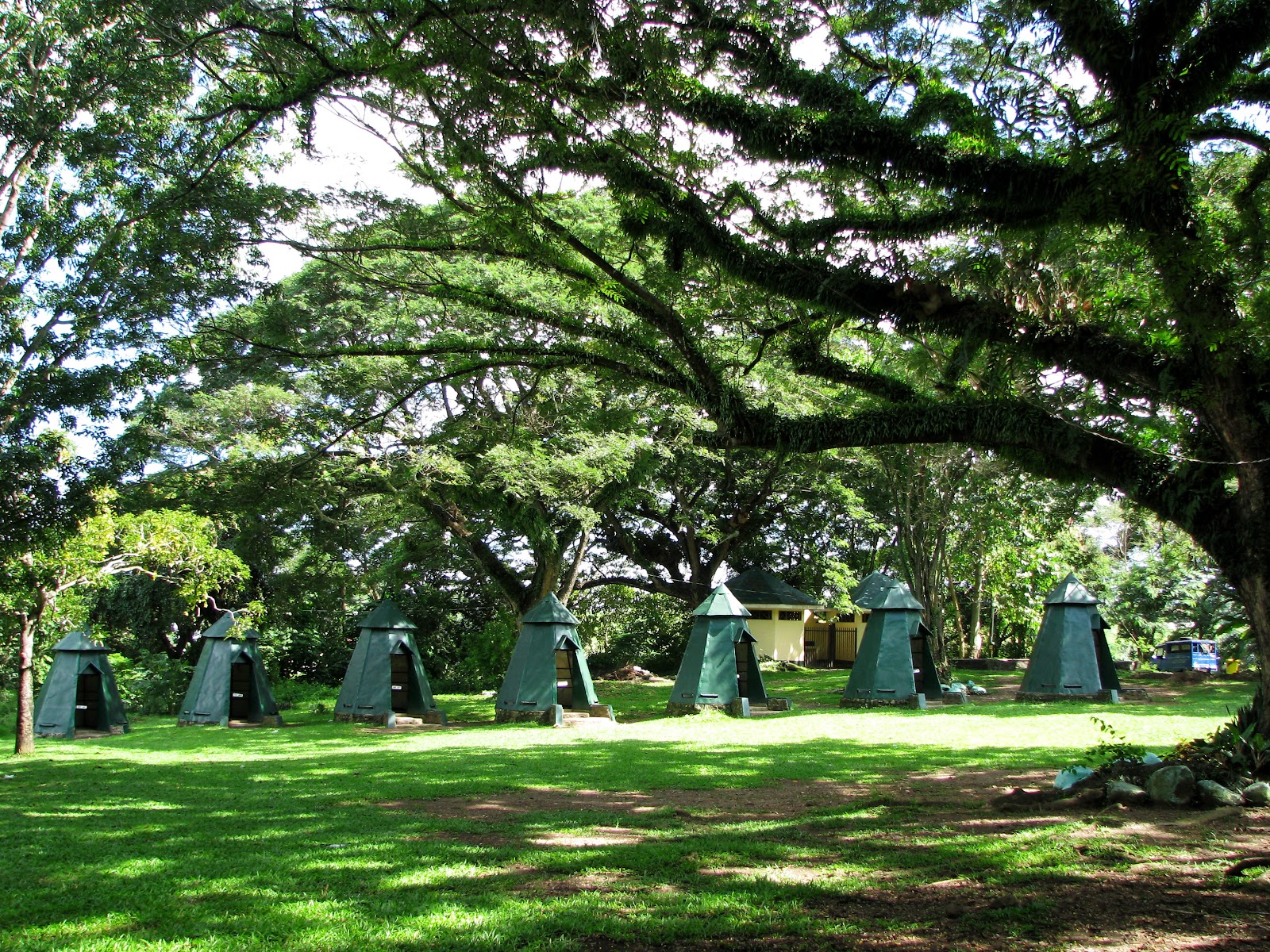
from the pueblo (downtown), Pasonanca Watershed Park is another distinctive
tourist landmark in the city. Considered as the only one of its kind in the
country, the park, which is gently traversed by a stream, teems with trees,
flowering plants, ferns, shrubs and various species of orchids. In the middle
of it all is the iconic tree house, which used to be so famous some three to
four decades ago such that the city became synonymous with it.
Lying a few kilometers away
from the pueblo (downtown), Pasonanca Watershed Park is another distinctive
tourist landmark in the city. Considered as the only one of its kind in the
country, the park, which is gently traversed by a stream, teems with trees,
flowering plants, ferns, shrubs and various species of orchids. In the middle
of it all is the iconic tree house, which used to be so famous some three to
four decades ago such that the city became synonymous with it.
 Through the years, however,
Pasonanca has evolved into a huge park complex with three natural swimming
pools, a floral garden, an aviary, and a butterfly farm. Around the watershed
are several dining and entertainment establishments. A full day would be
required to explore the whole complex.
Through the years, however,
Pasonanca has evolved into a huge park complex with three natural swimming
pools, a floral garden, an aviary, and a butterfly farm. Around the watershed
are several dining and entertainment establishments. A full day would be
required to explore the whole complex.
 Search
for
interesting facts about the city’s Hispanic past. Perhaps the best place to
learn more about Zamboanga’s history during the Spanish era would be Fort Pilar,
the old fortress located near Paseo del Mar, which has been converted into a
branch of the country’s National Museum. This museum displays a vast collection
of ethnographic materials of various tribes, colorful blankets and clothes,
hats, back-strap weaving loom, model houses, musical instruments, houseboats,
fishing tools and household items, among others.
Search
for
interesting facts about the city’s Hispanic past. Perhaps the best place to
learn more about Zamboanga’s history during the Spanish era would be Fort Pilar,
the old fortress located near Paseo del Mar, which has been converted into a
branch of the country’s National Museum. This museum displays a vast collection
of ethnographic materials of various tribes, colorful blankets and clothes,
hats, back-strap weaving loom, model houses, musical instruments, houseboats,
fishing tools and household items, among others.
 Zamboanga’s answer to
Manila’s Intramuros, Fort Pilar is officially called Real Fuerza de Nuestra
Señora del Pilar de Zaragoza (Royal Force of Our Lady of the Pillar of
Zaragoza). Attacked by the Dutch, stormed by the Moros, cannonaded by the
British, occupied by the Americans and seized by the Japanese, the nearly
400-year old impregnable fortress has survived time and the elements. Today, an
open-air shrine adjacent to the fort has been erected in honor of the
miraculous Our Lady of the Pillar, the city’s patron saint. Sunday masses are
being held in this Marian shrine.
Zamboanga’s answer to
Manila’s Intramuros, Fort Pilar is officially called Real Fuerza de Nuestra
Señora del Pilar de Zaragoza (Royal Force of Our Lady of the Pillar of
Zaragoza). Attacked by the Dutch, stormed by the Moros, cannonaded by the
British, occupied by the Americans and seized by the Japanese, the nearly
400-year old impregnable fortress has survived time and the elements. Today, an
open-air shrine adjacent to the fort has been erected in honor of the
miraculous Our Lady of the Pillar, the city’s patron saint. Sunday masses are
being held in this Marian shrine.
 Supplicate
in
churches and mosques. Like a few other cities in Mindanao, Zamboanga is a
melting pot of various spiritual beliefs and traditions. Hence, one can find a
number of churches and mosques dotting the city’s landscape. For Christians,
there’s the city’s Metropolitan Cathedral of the Immaculate Conception, one of
the modern churches in Mindanao. At first blush, I thought the cathedral was a
newly constructed shopping mall because of its sheer size and modern
architecture.
Supplicate
in
churches and mosques. Like a few other cities in Mindanao, Zamboanga is a
melting pot of various spiritual beliefs and traditions. Hence, one can find a
number of churches and mosques dotting the city’s landscape. For Christians,
there’s the city’s Metropolitan Cathedral of the Immaculate Conception, one of
the modern churches in Mindanao. At first blush, I thought the cathedral was a
newly constructed shopping mall because of its sheer size and modern
architecture.
Meanwhile, Islam’s
worshippers can also visit the mosque in the village of Taluksangay, which is
probably one of the most beautiful in the entire island.
 Shop
till you drop at the barter center. Time was when the "barter" system
was very much alive in Zamboanga, especially during the Marcos years but this
came to an end with the former regime’s ouster. However, one can still find
tax-free products from Indonesia and Malaysia being sold at cheap prices in
various places in the city.
Shop
till you drop at the barter center. Time was when the "barter" system
was very much alive in Zamboanga, especially during the Marcos years but this
came to an end with the former regime’s ouster. However, one can still find
tax-free products from Indonesia and Malaysia being sold at cheap prices in
various places in the city.
Canelar Barter Center is one
of the more popular sites frequented by tourists looking for pasalubong such as
t-shirts, dresses, shawls, pants, towels, canned goods, chocolates, biscuits,
sotanghon and other goodies. Since it is a tiangge,
I took every opportunity to haggle to the max with the Muslim traders just to
get the best bargains.
Sup
and sip. When it comes to seafood, Zamboanga offers some of most
delectable cuisine this side of the country. Curacha, a unique sea crab species
inhabiting Zamboanga’s waters, is one dish that foodies shouldn’t dare miss. One
of the city’s famous restaurants, Alavar Seafood House, offers the tastiest
curacha in town. Worth trying also are the Zamboangueños’ version of yummy
Spanish dishes like callos and paella. Other culinary delights can also be
savored at Haisan, Café del Sol, New Country Chicken House, Palmeras, among
others.
And for those who think that
the City of Flowers has no nightlife, why not head for Talisay Bar at Lantaka
Hotel by the Sea, La Vista del Mar and other newer establishments for a sip of
your favorite booze? Also, never miss trying a glass of Zamboanga White, a
creamy concoction of lychee juice and vanilla ice cream, which is named after a
breed of cockfighting rooster native to the city.
 Swim
and snorkel in the city’s fine beaches, particularly
those at the twin islands of Great and Little Santa Cruz, which I didn’t have
time to explore. Visible from Paseo del Mar, the larger one boasts of a
pink-sand beach and a sandbar while the smaller one has a white-sand beach
that’s ideal for diving. Almost deserted, there are no hotels, restaurants, and
resorts in these islands. A trip there has to be arranged in advance with the
Department of Tourism (DOT).
Swim
and snorkel in the city’s fine beaches, particularly
those at the twin islands of Great and Little Santa Cruz, which I didn’t have
time to explore. Visible from Paseo del Mar, the larger one boasts of a
pink-sand beach and a sandbar while the smaller one has a white-sand beach
that’s ideal for diving. Almost deserted, there are no hotels, restaurants, and
resorts in these islands. A trip there has to be arranged in advance with the
Department of Tourism (DOT).
 After trying all these
things, I bet you’ll agree with me that Zamboanga is probably the closest that
less fortunate souls like us who can’t afford a trip abroad can get to old
España. So, if given another chance, I’d really love to come back. Por eso, vamos a Zamboanga!
After trying all these
things, I bet you’ll agree with me that Zamboanga is probably the closest that
less fortunate souls like us who can’t afford a trip abroad can get to old
España. So, if given another chance, I’d really love to come back. Por eso, vamos a Zamboanga!
More pics:


 Sitting
on a 9-hectare lot, the Divine Mercy Shrine, which is about an hour’s drive
from Cagayan de Oro City, also doubles as a tourist attraction in that part of
Mindanao, attracting hundreds, sometimes thousands of visitors year in, year
out. Facing Macalajar Bay, it has become a pilgrimage site for the devout, the
diseased and the desperate who flock there, especially during weekends and
holidays, to seek God’s unending mercy.
Sitting
on a 9-hectare lot, the Divine Mercy Shrine, which is about an hour’s drive
from Cagayan de Oro City, also doubles as a tourist attraction in that part of
Mindanao, attracting hundreds, sometimes thousands of visitors year in, year
out. Facing Macalajar Bay, it has become a pilgrimage site for the devout, the
diseased and the desperate who flock there, especially during weekends and
holidays, to seek God’s unending mercy.
 Completed
in 2008 out of donations from devout Divine Mercy followers, the Divine Mercy
Shrine was inaugurated by no less than Most Reverend Archbishop Antonio Ledesma
of Cagayan de Oro City. The event, which also coincided with the birthday of
the Blessed Virgin Mary, was attended by over 20,000 devotees, pilgrims and
visitors, not only from the Philippines but also from other parts of the world.
Completed
in 2008 out of donations from devout Divine Mercy followers, the Divine Mercy
Shrine was inaugurated by no less than Most Reverend Archbishop Antonio Ledesma
of Cagayan de Oro City. The event, which also coincided with the birthday of
the Blessed Virgin Mary, was attended by over 20,000 devotees, pilgrims and
visitors, not only from the Philippines but also from other parts of the world. 

 It
was a UP Fine Arts graduate from Angeles, Pampanga, Nick Reyes, who sculpted
the awe-inspiring statue. A "halo" made out of stained glass serves
as the figure's crowning glory. The rays, which symbolize the "blood"
and "water" which flowed out from Jesus' heart, is made out of an
alternate of stained glass and tiles. These rays are actually staircases
leading up to the “heart” of Jesus.
It
was a UP Fine Arts graduate from Angeles, Pampanga, Nick Reyes, who sculpted
the awe-inspiring statue. A "halo" made out of stained glass serves
as the figure's crowning glory. The rays, which symbolize the "blood"
and "water" which flowed out from Jesus' heart, is made out of an
alternate of stained glass and tiles. These rays are actually staircases
leading up to the “heart” of Jesus. At
the heart is a hidden niche with a life-size statue of St. Sister Faustina, the
Polish nun who had a vision which described what is now called the Chaplet of
Divine Mercy. Carved at the base of the statue are the words, “JESUS I TRUST IN
YOU”. There's a healing chapel found at the base of the statue. On one side is
a smaller statue of the Blessed Virgin Mary.
At
the heart is a hidden niche with a life-size statue of St. Sister Faustina, the
Polish nun who had a vision which described what is now called the Chaplet of
Divine Mercy. Carved at the base of the statue are the words, “JESUS I TRUST IN
YOU”. There's a healing chapel found at the base of the statue. On one side is
a smaller statue of the Blessed Virgin Mary.
 Now,
here’s a caveat for those who are fond of wearing revealing clothing, e.g.
sleeveless blouses, shorts, mini-skirts, sandos, tube tops, etc., anywhere they
go. If you’re planning to visit the shrine, better don something more
appropriate as the staff or the guards there will really call your attention and
tell you the holy place isn’t a picnic ground. Worst, they’d compel you to wear
a blue or red cloth either as a shawl or a skirt just to cover your
“nakedness”. Guys, you wouldn’t want to be forced to wear a skirt against your
will, eh? LOL!
Now,
here’s a caveat for those who are fond of wearing revealing clothing, e.g.
sleeveless blouses, shorts, mini-skirts, sandos, tube tops, etc., anywhere they
go. If you’re planning to visit the shrine, better don something more
appropriate as the staff or the guards there will really call your attention and
tell you the holy place isn’t a picnic ground. Worst, they’d compel you to wear
a blue or red cloth either as a shawl or a skirt just to cover your
“nakedness”. Guys, you wouldn’t want to be forced to wear a skirt against your
will, eh? LOL!