Oslob completes my recent tour along southern
Cebu’s heritage trail. Mention the name of this place and chances are, people
would most likely be thinking about the friendly whale sharks locally known as butanding, which have become the latest
sensations in this quiet town south of the island province.
If you’re one of those who think that Oslob is all about
those friendly gentle giants, well, think again. The quaint town has more than
meets the eye! On a brief sojourn there, I discovered a number of ancient
Spanish landmarks that speak so much of the richness and grandeur of the
Cebuanos’ heritage.
 |
Our Lady of the Immaculate Conception Church
|
Legend has it that Oslob got its name from the Visayan word, toslob, which means “to soak or dip”. When a group of Spanish guardia civil came to town in the 1700s, they saw two natives eating boiled bananas while soaking them in vinegar. The strangers then inquired from the locals the name of the place.

 Thinking they were being asked what they were doing, the Cebuanos replied, toslob, referring to the act of soaking the bananas in vinegar, which made the Spaniards think the town was called “Toslob.” Over time, the “T” was dropped and Oslob came to be the town’s name as a result of the miscommunication.
Swimming with Oslob’s butanding
seemed enticing. However, it wasn’t part of my agenda. Truth be told, the
culture vulture in me had a far less mundane intention than that, which is to
pay a visit to an old and massive bastion of faith that has stood the test of
events and the elements—Our Lady of the
Immaculate Conception Churc

 Done in Neoclassical style, the coral stone church with a
yellowish façade was built in 1830 and completed in 1848. Like most of the
others I’ve visited in southern Cebu, the church, which faces Bohol Strait, is
surrounded by a stone wall. Today, this church complex forms part of what is
known as the Oslob Heritage Park.
Done in Neoclassical style, the coral stone church with a
yellowish façade was built in 1830 and completed in 1848. Like most of the
others I’ve visited in southern Cebu, the church, which faces Bohol Strait, is
surrounded by a stone wall. Today, this church complex forms part of what is
known as the Oslob Heritage Park.

 From what I’ve gathered, the Oslob Church was destroyed
by fire thrice, first in 1942, then in 1955 and most recently, in 2008.
Fortunately, efforts to restore the church back to its former glory were
completed in 2010. To my dismay, however, it was closed at the time when I
came—I failed to see its restored interior!
From what I’ve gathered, the Oslob Church was destroyed
by fire thrice, first in 1942, then in 1955 and most recently, in 2008.
Fortunately, efforts to restore the church back to its former glory were
completed in 2010. To my dismay, however, it was closed at the time when I
came—I failed to see its restored interior!
 |
Belfry of Oslob Church
|
Standing beside the Oslob Church is its four-storey massive bell tower with a Neoclassical dome, which was built in 1859. The belfry was reportedly five-levels high but the topmost floor was destroyed by a typhoon and was never rebuilt.
 |
A capilla posa
|

 Across the church, I saw this stone structure that
resembled a chapel—must be an old capilla
posa (a processional oratory that’s rarely or never a chapel) or a capilla mortuario (mortuary chapel). Presently, it seemed like it had been converted
into a bodega where a number of damaged religious stuff are being kept.
Across the church, I saw this stone structure that
resembled a chapel—must be an old capilla
posa (a processional oratory that’s rarely or never a chapel) or a capilla mortuario (mortuary chapel). Presently, it seemed like it had been converted
into a bodega where a number of damaged religious stuff are being kept.
 |
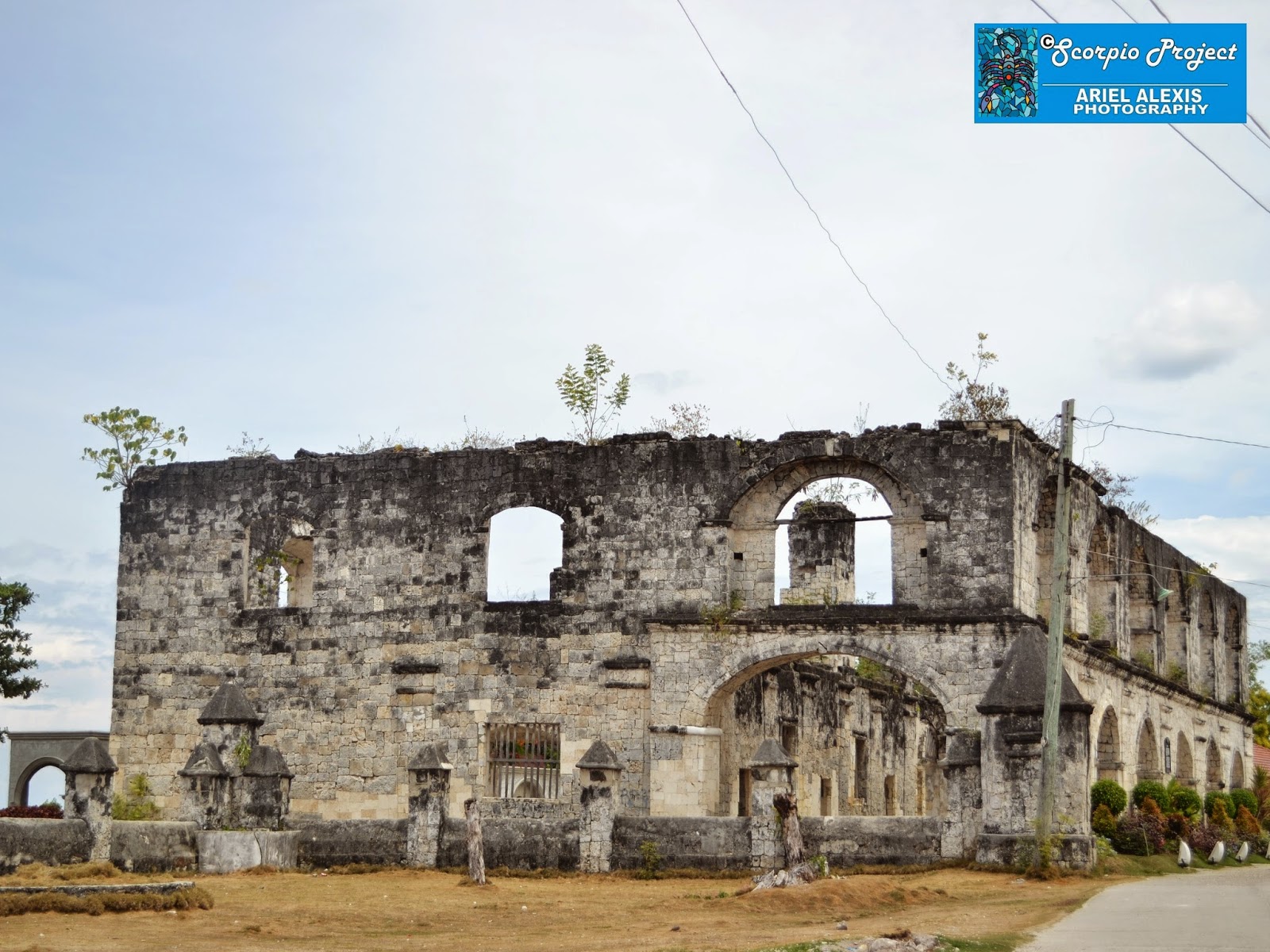
| Front view of Cuartel |

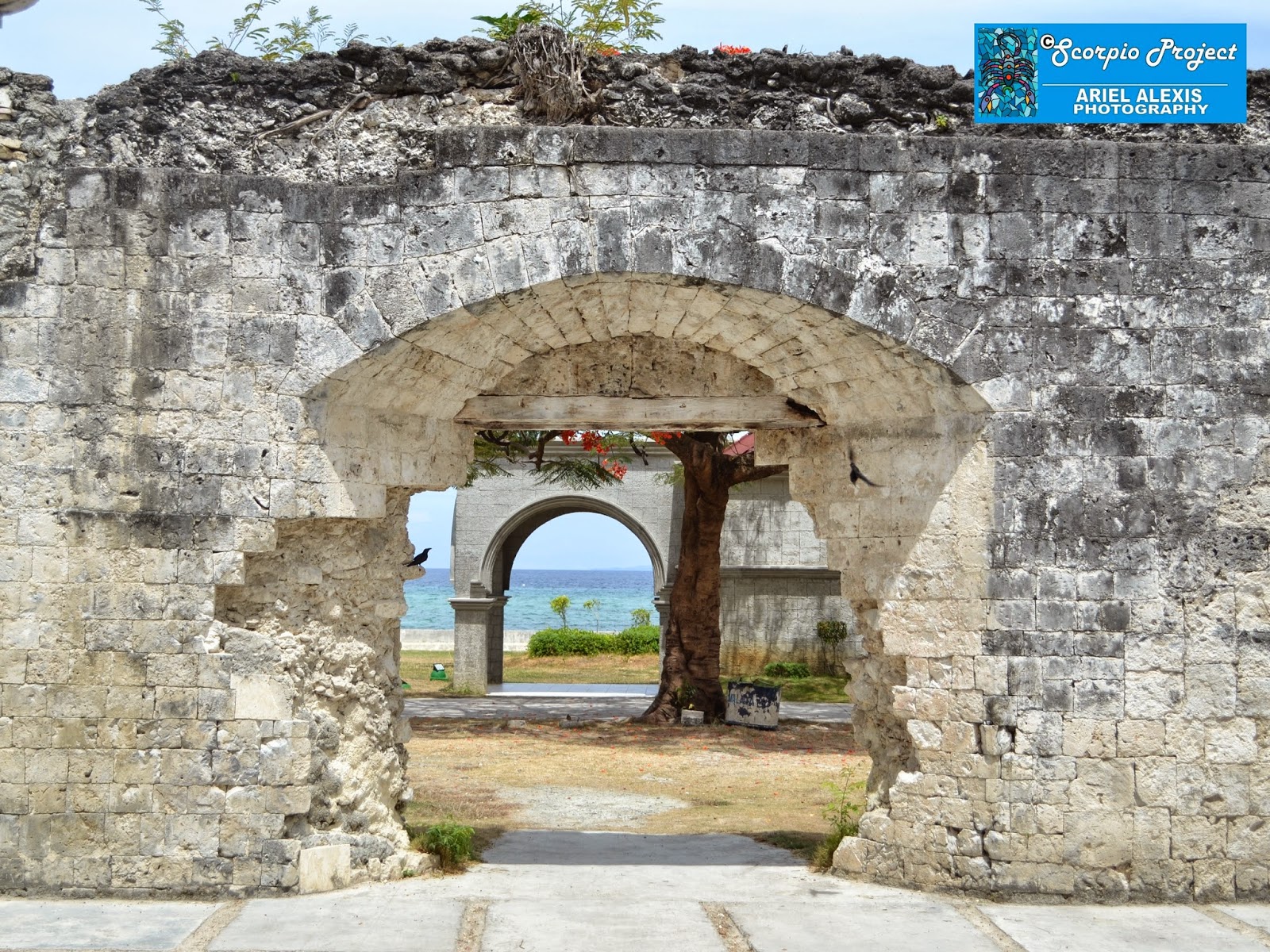
 A stone’s throw away from the church is the town’s
heritage park. Here, you can find the remains of an unfinished immense
structure that looked like a military facility. Gazing at it, I was suddenly
reminded of the ruins of Fort Santiago in Intramuros. I went on the explore the
landmark that’s one of Oslob’s attractions.
A stone’s throw away from the church is the town’s
heritage park. Here, you can find the remains of an unfinished immense
structure that looked like a military facility. Gazing at it, I was suddenly
reminded of the ruins of Fort Santiago in Intramuros. I went on the explore the
landmark that’s one of Oslob’s attractions.

 Simply known as Cuartel,
the Spanish word for “barracks”, the abandoned edifice was reportedly intended
to serve as a first line of defense for the Spanish naval forces against
hostile invaders given the location of Oslob, which was then prone to attacks
by Moros coming from the sea.
Simply known as Cuartel,
the Spanish word for “barracks”, the abandoned edifice was reportedly intended
to serve as a first line of defense for the Spanish naval forces against
hostile invaders given the location of Oslob, which was then prone to attacks
by Moros coming from the sea.


A
marker at the site mentions that the uncompleted structure was built by a
certain El Gran Maestro Don Marcus Sabandal to house the Spanish armies.
However, its construction never came to fruition when the Americans arrived in
the Philippines in 1899 and became the new rulers of the archipelago.
 |
Baluarte
|
While basking in the beauty of my surroundings, I saw the ruins of the so-called baluarte, one of the seven watchtowers erected along the coastline
of Oslob in 1788 as part of the fortifications against the Moro raids during
those days.

 Soaking up in Oslob’s heritage landmarks, particularly its church, turned out to be a one-of-a-kind last summer hurrah for me. The spiritual sortie I had there as well as in the other churches of southern Cebu have enhanced my knowledge about the history of those towns and enriched my understanding of the depth of the Cebuanos’ faith.
 Having experienced the flush of excitement that came with
the pursuit of this heritage trail, I highly recommend the path to
enlightenment to all those who want to go on a pilgrimage, a retreat or a
soul-searching sojourn at any given time to the churches of Argao, Boljoon,
Carcar, Dalaguete and Oslob.
Having experienced the flush of excitement that came with
the pursuit of this heritage trail, I highly recommend the path to
enlightenment to all those who want to go on a pilgrimage, a retreat or a
soul-searching sojourn at any given time to the churches of Argao, Boljoon,
Carcar, Dalaguete and Oslob.
 Add also those houses of worship found in the cities of
Talisay and Naga, as well as the towns of Minghanilla, San Fernando, Sibonga,
including the shrine in Simala, to the list of spiritual must-sees (which I
hope to include in my forthcoming trips to Cebu).
Add also those houses of worship found in the cities of
Talisay and Naga, as well as the towns of Minghanilla, San Fernando, Sibonga,
including the shrine in Simala, to the list of spiritual must-sees (which I
hope to include in my forthcoming trips to Cebu).
 Apart from their spiritual significance, these churches
are stimulants to the creative process. So, I also encourage those who want to
create their masterpieces—a painting, a poem, a photoplay or a paperback
perhaps—to follow this rousing path to spiritual rejuvenation near Cebu City
yet removed from the hubbub of metropolitan chaos. :-D
Apart from their spiritual significance, these churches
are stimulants to the creative process. So, I also encourage those who want to
create their masterpieces—a painting, a poem, a photoplay or a paperback
perhaps—to follow this rousing path to spiritual rejuvenation near Cebu City
yet removed from the hubbub of metropolitan chaos. :-D
In coming up with this anthology on Cebu’s heritage
churches, I’ve referred to the following:


 Thinking they were being asked what they were doing, the Cebuanos replied, toslob, referring to the act of soaking the bananas in vinegar, which made the Spaniards think the town was called “Toslob.” Over time, the “T” was dropped and Oslob came to be the town’s name as a result of the miscommunication.
 Done in Neoclassical style, the coral stone church with a
yellowish façade was built in 1830 and completed in 1848. Like most of the
others I’ve visited in southern Cebu, the church, which faces Bohol Strait, is
surrounded by a stone wall. Today, this church complex forms part of what is
known as the Oslob Heritage Park.
Done in Neoclassical style, the coral stone church with a
yellowish façade was built in 1830 and completed in 1848. Like most of the
others I’ve visited in southern Cebu, the church, which faces Bohol Strait, is
surrounded by a stone wall. Today, this church complex forms part of what is
known as the Oslob Heritage Park. 
 From what I’ve gathered, the Oslob Church was destroyed
by fire thrice, first in 1942, then in 1955 and most recently, in 2008.
Fortunately, efforts to restore the church back to its former glory were
completed in 2010. To my dismay, however, it was closed at the time when I
came—I failed to see its restored interior!
From what I’ve gathered, the Oslob Church was destroyed
by fire thrice, first in 1942, then in 1955 and most recently, in 2008.
Fortunately, efforts to restore the church back to its former glory were
completed in 2010. To my dismay, however, it was closed at the time when I
came—I failed to see its restored interior!

 Across the church, I saw this stone structure that
resembled a chapel—must be an old capilla
posa (a processional oratory that’s rarely or never a chapel) or a capilla mortuario (mortuary chapel). Presently, it seemed like it had been converted
into a bodega where a number of damaged religious stuff are being kept.
Across the church, I saw this stone structure that
resembled a chapel—must be an old capilla
posa (a processional oratory that’s rarely or never a chapel) or a capilla mortuario (mortuary chapel). Presently, it seemed like it had been converted
into a bodega where a number of damaged religious stuff are being kept.

 A stone’s throw away from the church is the town’s
heritage park. Here, you can find the remains of an unfinished immense
structure that looked like a military facility. Gazing at it, I was suddenly
reminded of the ruins of Fort Santiago in Intramuros. I went on the explore the
landmark that’s one of Oslob’s attractions.
A stone’s throw away from the church is the town’s
heritage park. Here, you can find the remains of an unfinished immense
structure that looked like a military facility. Gazing at it, I was suddenly
reminded of the ruins of Fort Santiago in Intramuros. I went on the explore the
landmark that’s one of Oslob’s attractions. 
 Simply known as Cuartel,
the Spanish word for “barracks”, the abandoned edifice was reportedly intended
to serve as a first line of defense for the Spanish naval forces against
hostile invaders given the location of Oslob, which was then prone to attacks
by Moros coming from the sea.
Simply known as Cuartel,
the Spanish word for “barracks”, the abandoned edifice was reportedly intended
to serve as a first line of defense for the Spanish naval forces against
hostile invaders given the location of Oslob, which was then prone to attacks
by Moros coming from the sea. 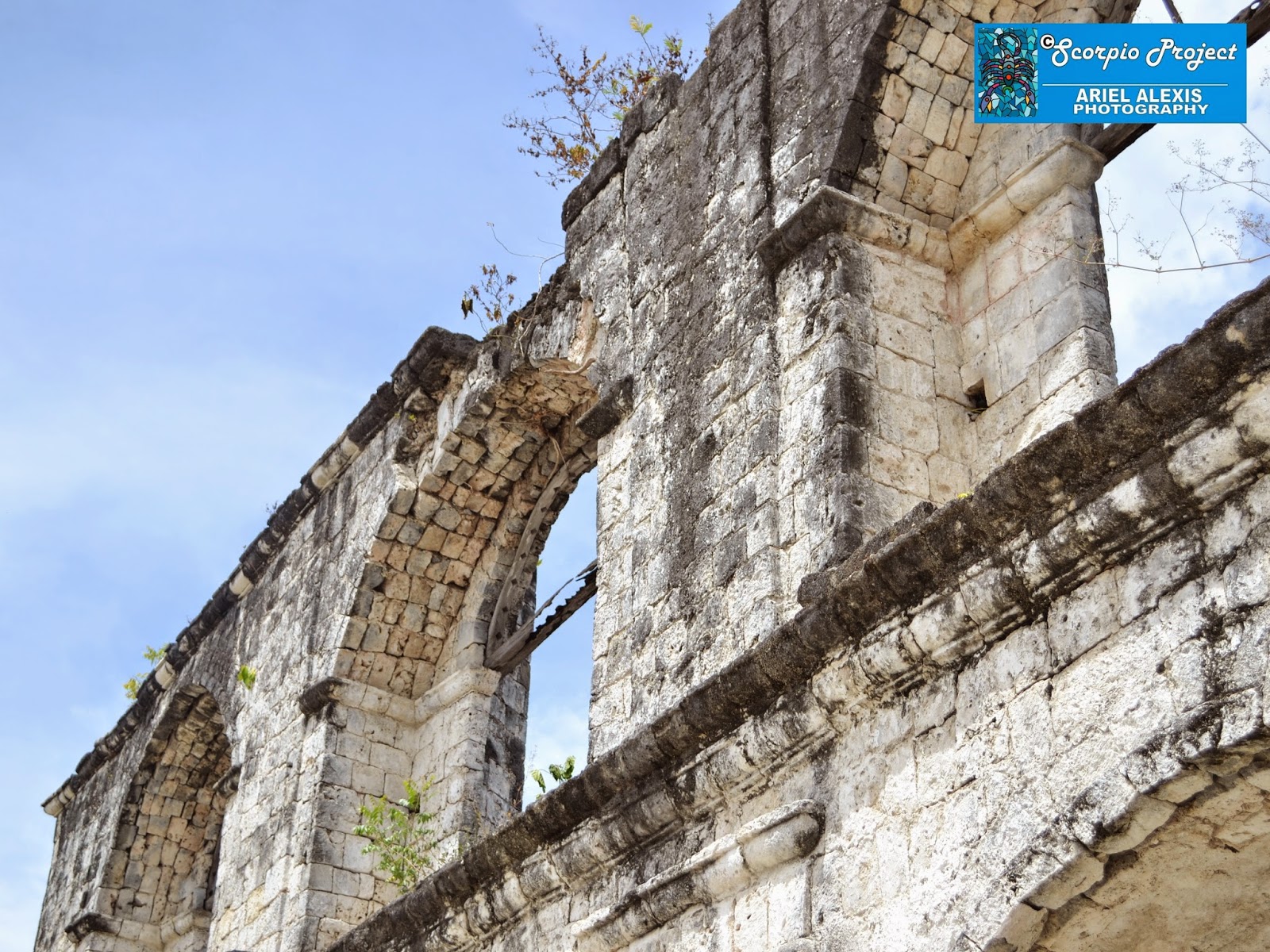



 Sinking into one of the benches there, I basked in the
serenity of the sea and sky right in front of me. Then, I noticed this small
island looming at the distant horizon—Sumilon. The island is said to have this
private beach resort that boasts of high-end amenities for tourists. Who knows,
I might get there someday. LOL!
Sinking into one of the benches there, I basked in the
serenity of the sea and sky right in front of me. Then, I noticed this small
island looming at the distant horizon—Sumilon. The island is said to have this
private beach resort that boasts of high-end amenities for tourists. Who knows,
I might get there someday. LOL!


 Soaking up in Oslob’s heritage landmarks, particularly its church, turned out to be a one-of-a-kind last summer hurrah for me. The spiritual sortie I had there as well as in the other churches of southern Cebu have enhanced my knowledge about the history of those towns and enriched my understanding of the depth of the Cebuanos’ faith.
 Having experienced the flush of excitement that came with
the pursuit of this heritage trail, I highly recommend the path to
enlightenment to all those who want to go on a pilgrimage, a retreat or a
soul-searching sojourn at any given time to the churches of Argao, Boljoon,
Carcar, Dalaguete and Oslob.
Having experienced the flush of excitement that came with
the pursuit of this heritage trail, I highly recommend the path to
enlightenment to all those who want to go on a pilgrimage, a retreat or a
soul-searching sojourn at any given time to the churches of Argao, Boljoon,
Carcar, Dalaguete and Oslob. 
 Add also those houses of worship found in the cities of
Talisay and Naga, as well as the towns of Minghanilla, San Fernando, Sibonga,
including the shrine in Simala, to the list of spiritual must-sees (which I
hope to include in my forthcoming trips to Cebu).
Add also those houses of worship found in the cities of
Talisay and Naga, as well as the towns of Minghanilla, San Fernando, Sibonga,
including the shrine in Simala, to the list of spiritual must-sees (which I
hope to include in my forthcoming trips to Cebu). Apart from their spiritual significance, these churches
are stimulants to the creative process. So, I also encourage those who want to
create their masterpieces—a painting, a poem, a photoplay or a paperback
perhaps—to follow this rousing path to spiritual rejuvenation near Cebu City
yet removed from the hubbub of metropolitan chaos. :-D
Apart from their spiritual significance, these churches
are stimulants to the creative process. So, I also encourage those who want to
create their masterpieces—a painting, a poem, a photoplay or a paperback
perhaps—to follow this rousing path to spiritual rejuvenation near Cebu City
yet removed from the hubbub of metropolitan chaos. :-D


